AI Page Builder for WordPress: Which Model, and at What Cost?

Which AI model should you choose to build a WordPress page? How much will the generation cost, and how close will the result be to something you can use on your site? Those questions matter when you bring AI into a developer's workflow. A page needs to fit the design you already have, and you need to be able to change it afterwards.
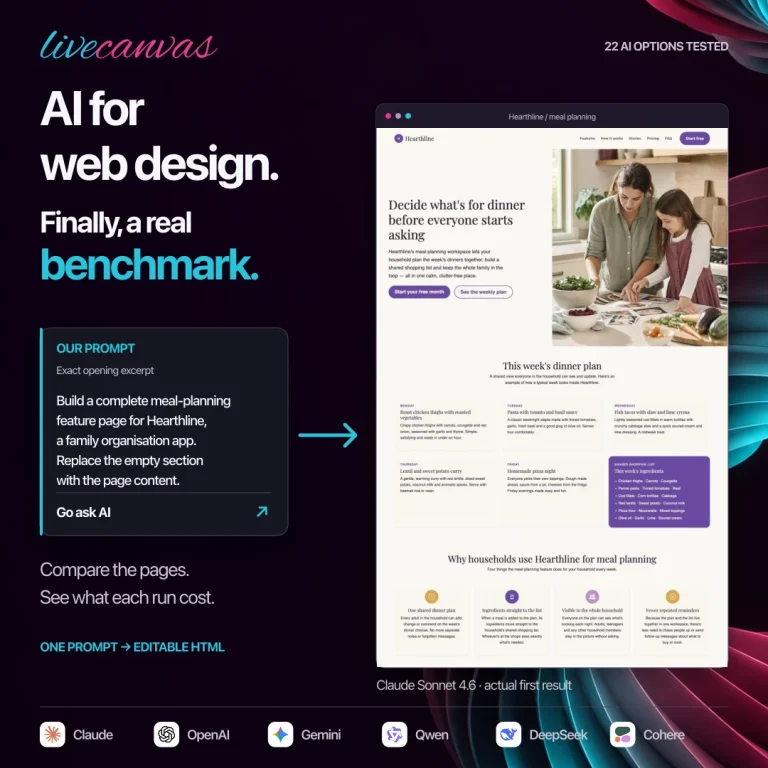
We used LiveCanvas as an AI page builder for WordPress to explore those questions. Its AI Assistant let us send the same page brief to different models through OpenRouter, then work with the generated HTML inside the editor. On 23 September 2026, we tried 22 OpenRouter options on one staging site. Twenty-one produced a page; one endpoint was rate-limited on both attempts.
The fastest call, Qwen3 Coder, generated a six-section page in 22.334 seconds for $0.00821772, less than one US cent. That page matched the supplied theme and stayed within both viewport widths we checked. It also contained a product claim we would edit before publishing. That combination is the point of this experiment: a small generation cost can buy a useful first draft, with the developer still responsible for the finished page.
What does AI actually build inside LiveCanvas?
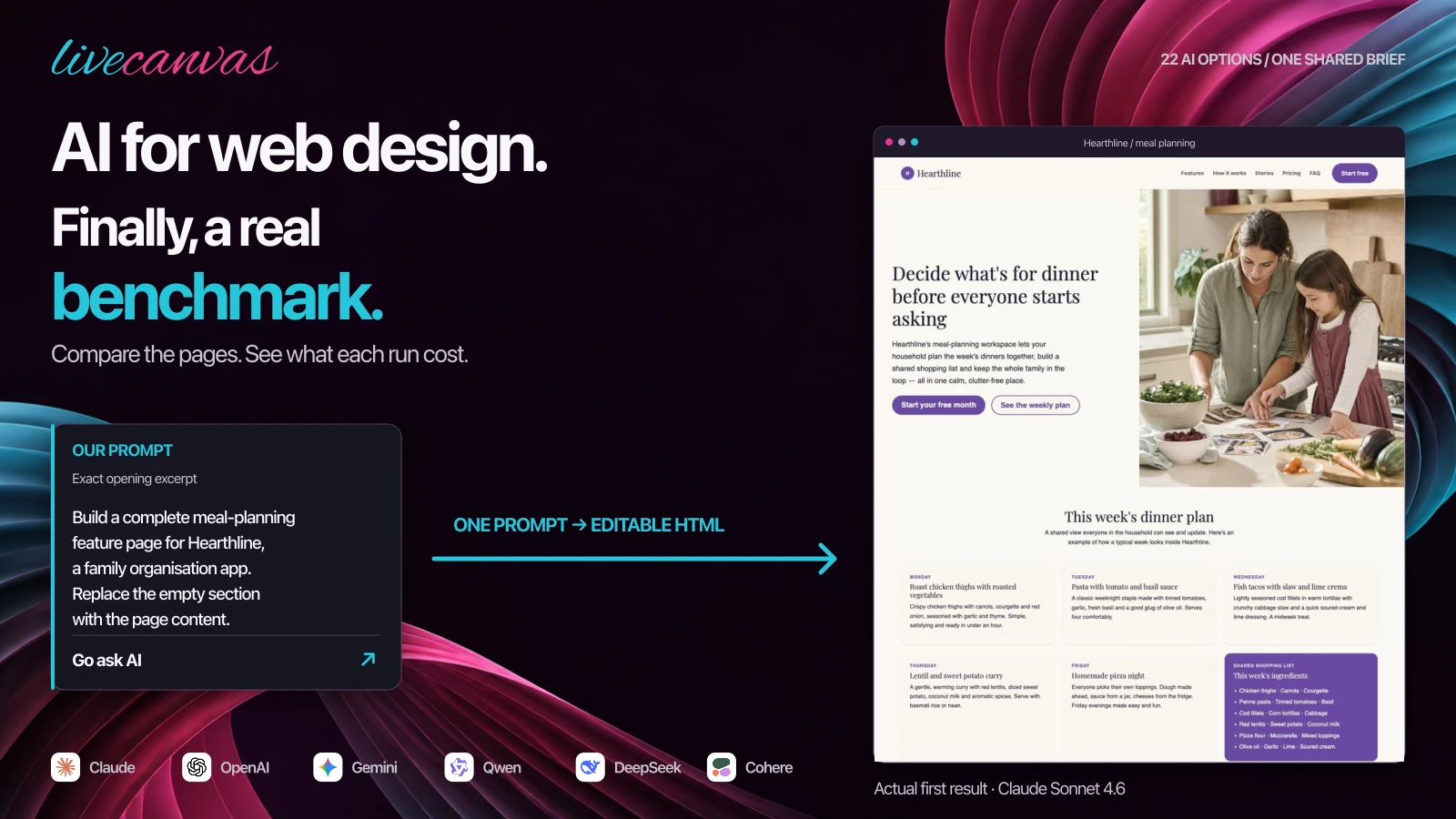
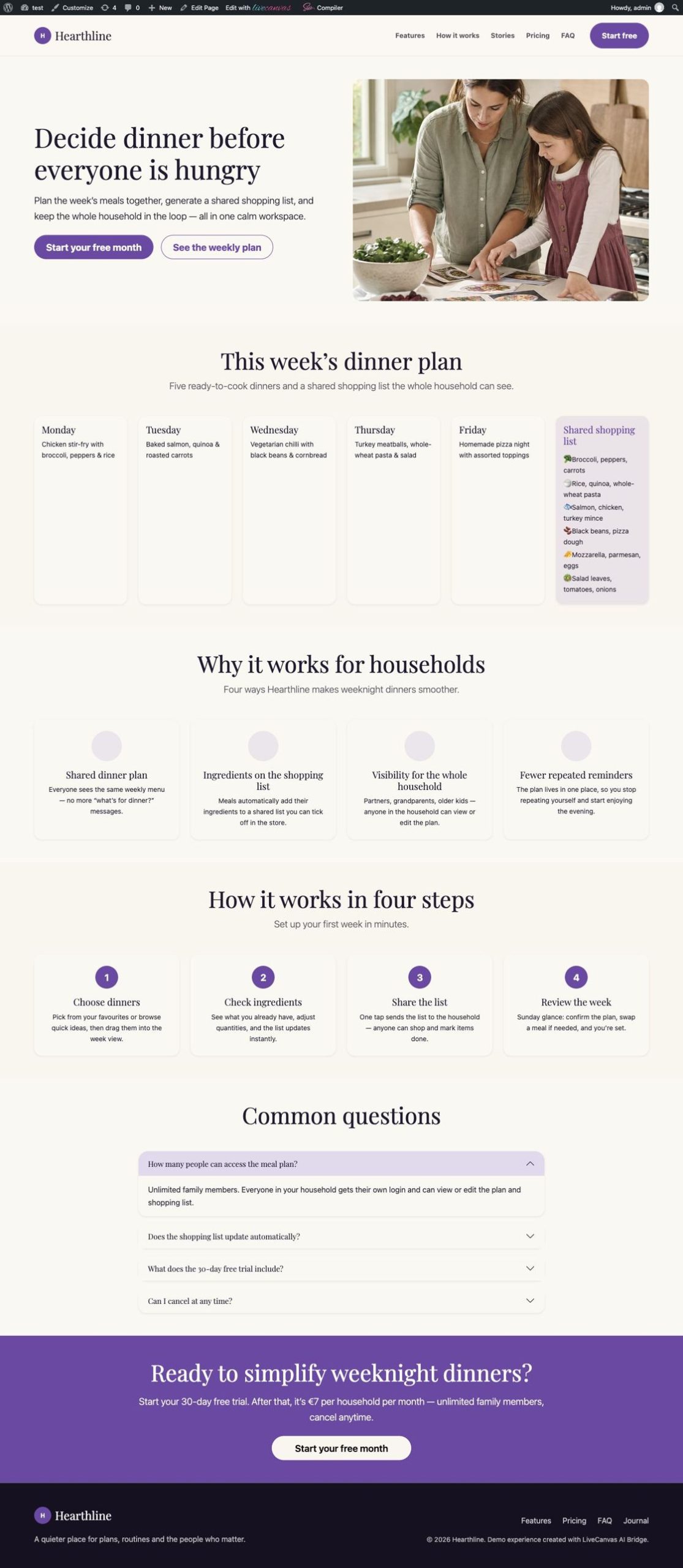
For this test, the AI wrote the frontend HTML for a page: its layout and copy, including a meal-plan preview and a working Bootstrap FAQ accordion. LiveCanvas placed that markup in the page we were editing. The WordPress theme continued to supply the site's header, footer and typography.
OpenRouter connects the Assistant to the selected model. Its unified API provides access to models from different companies through a common interface. Claude, GPT, Gemini and the other names in the tables are the models doing the generation. OpenRouter handles the request to the provider and records usage. This makes it possible to compare different options while keeping the same LiveCanvas workflow.
We began each attempt with a blank page and an empty section, chose the model in the Assistant and submitted the same brief using Go ask AI. Website Information and Page Text were switched off because all the site context for this controlled test was written into the prompt. Once generation finished, we saved the page and checked the frontend.
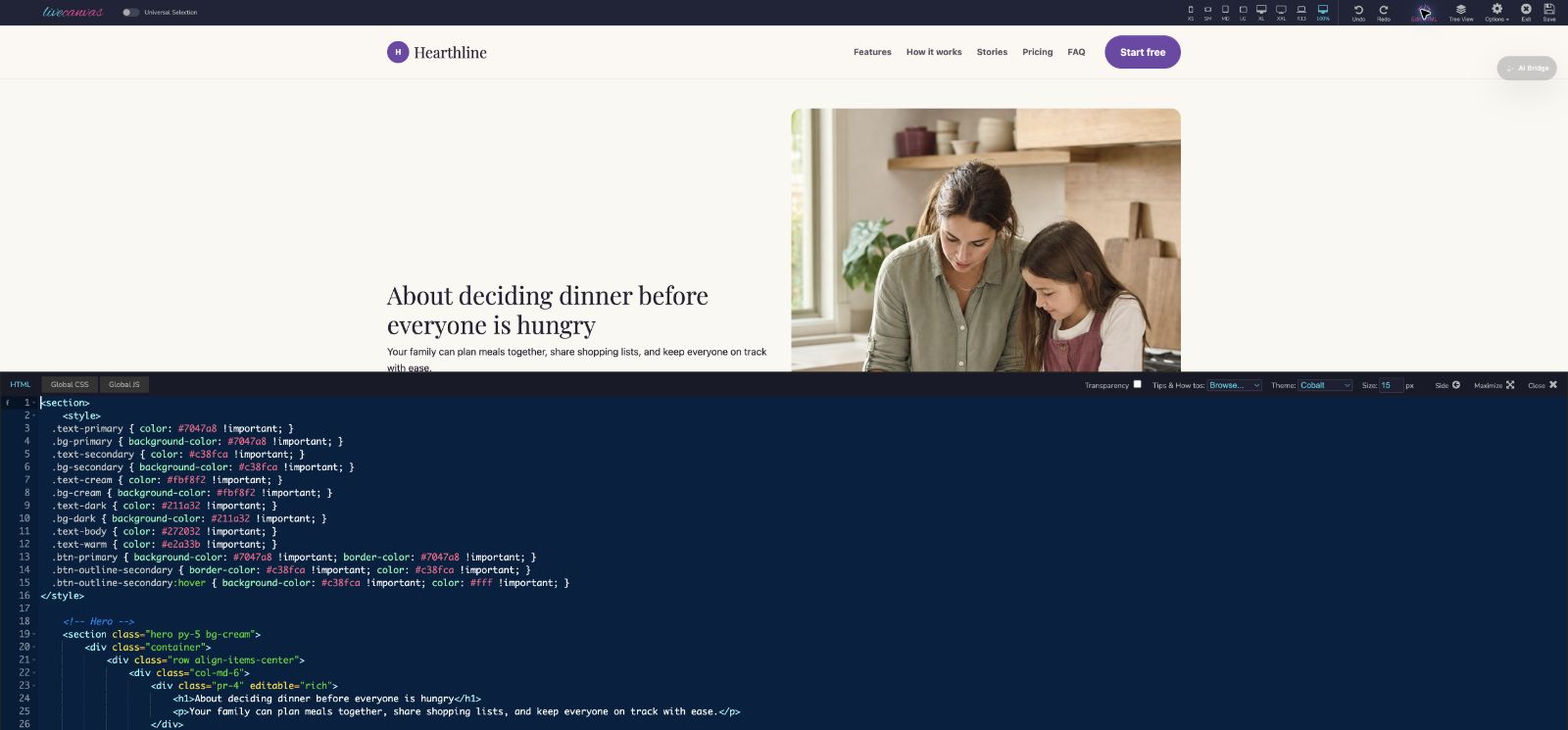
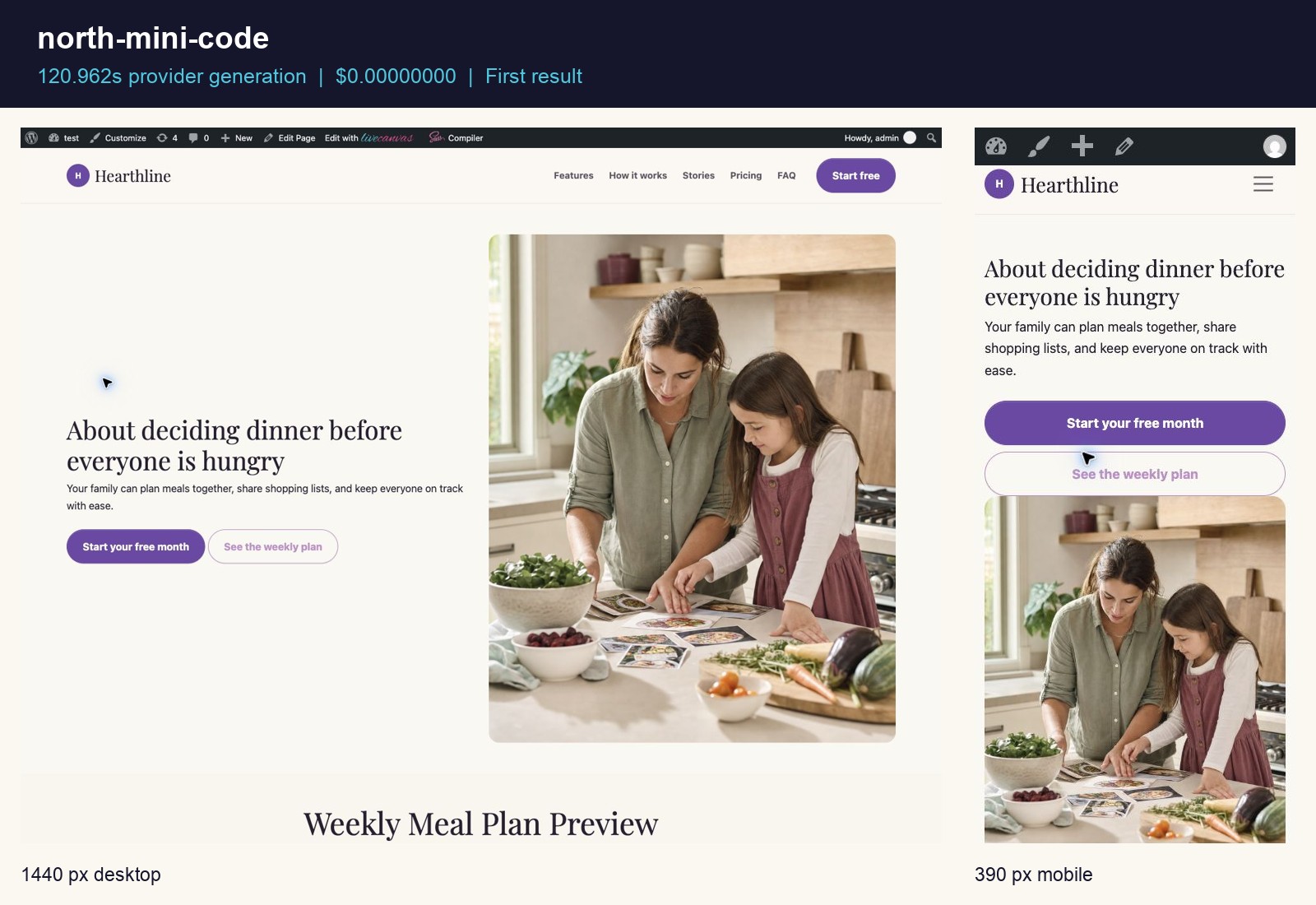
The generated page remains editable. You can change its text through LiveCanvas or open Edit HTML to inspect and adjust the markup. In the North result below, the text sits inside editable="rich" wrappers. The AI has supplied a starting layout that a developer can keep working on within the same page editor.
Can an AI-generated page match your existing WordPress site?
The site context made the brief useful. Our staging site was Hearthline, a demo family organisation app built with a Bootstrap 5 theme. It already used purple buttons on a cream background, Playfair Display headings and Inter body text. We put those decisions into the prompt, including the primary colour #7047a8, secondary colour #c38fca and body background #fbf8f2.
We also carried over the product facts. Hearthline described shared calendars, meal plans, routines and lists. The offer was 30 days free, then EUR 7 per household per month, with unlimited family members. Those details gave the models material for a meal-planning feature page that belonged to this particular site.
The page brief asked for a two-column hero followed by a five-day meal-plan preview and shopping list. Benefit cards and a short workflow explained the feature; four FAQs and a final call to action completed the page. The models had to use Bootstrap, preserve the existing header and footer, and make text editable in LiveCanvas. We supplied the path to one image already in the WordPress media library.
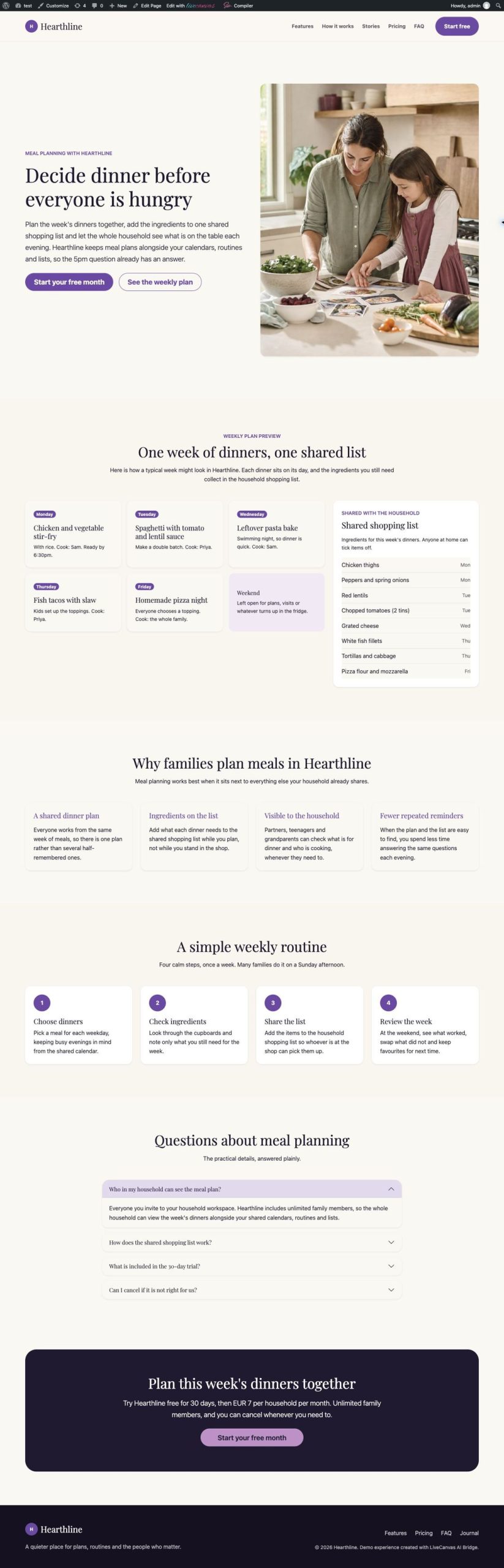
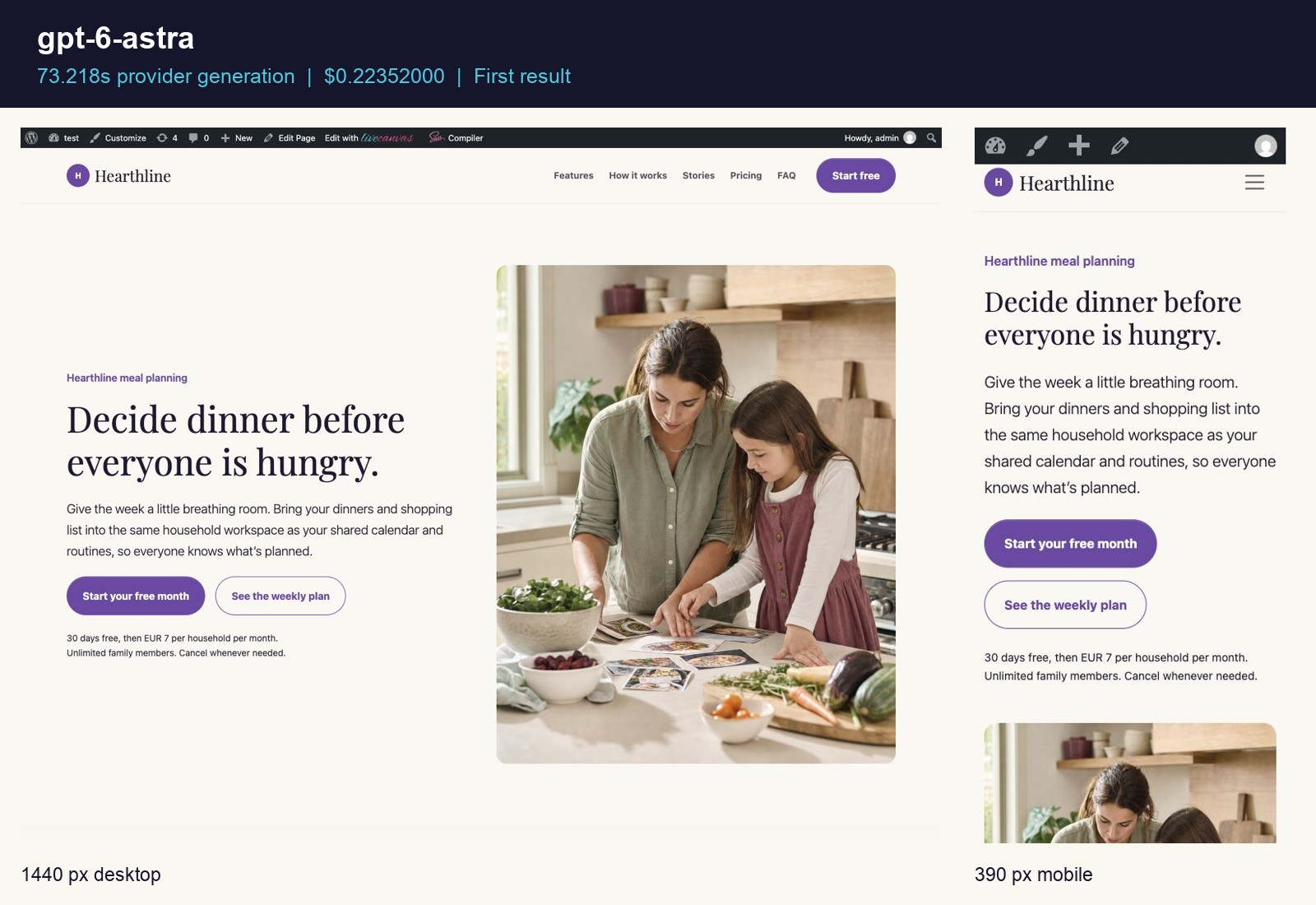
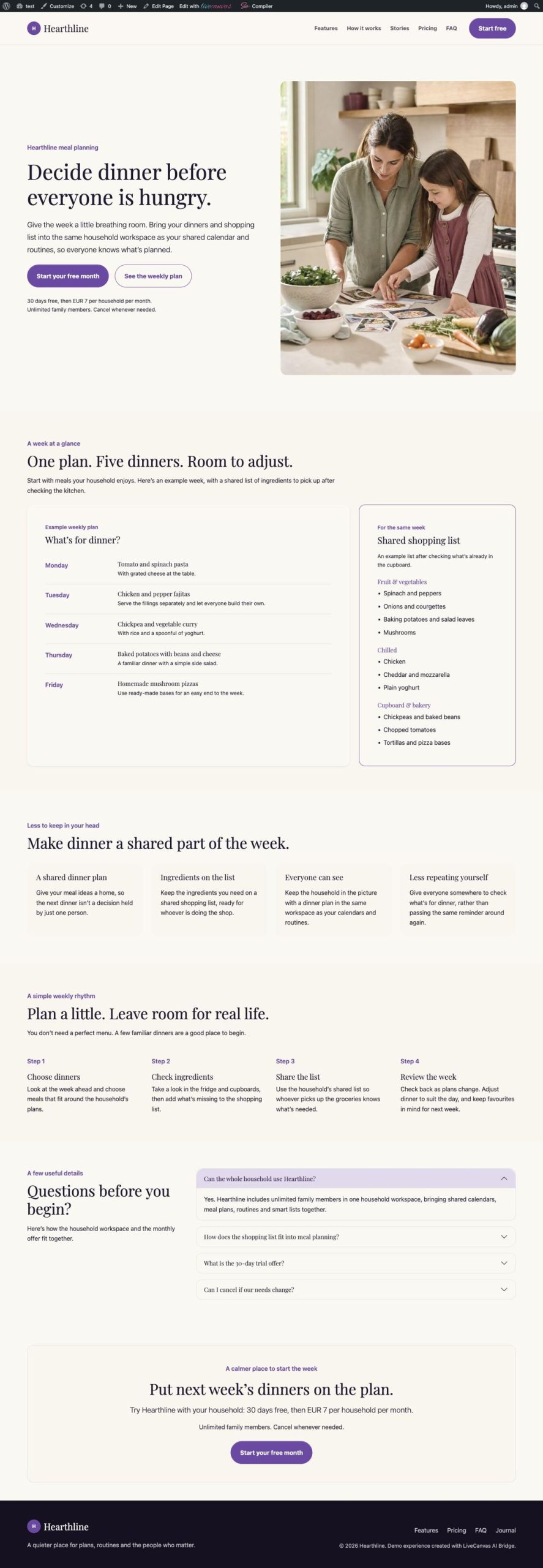
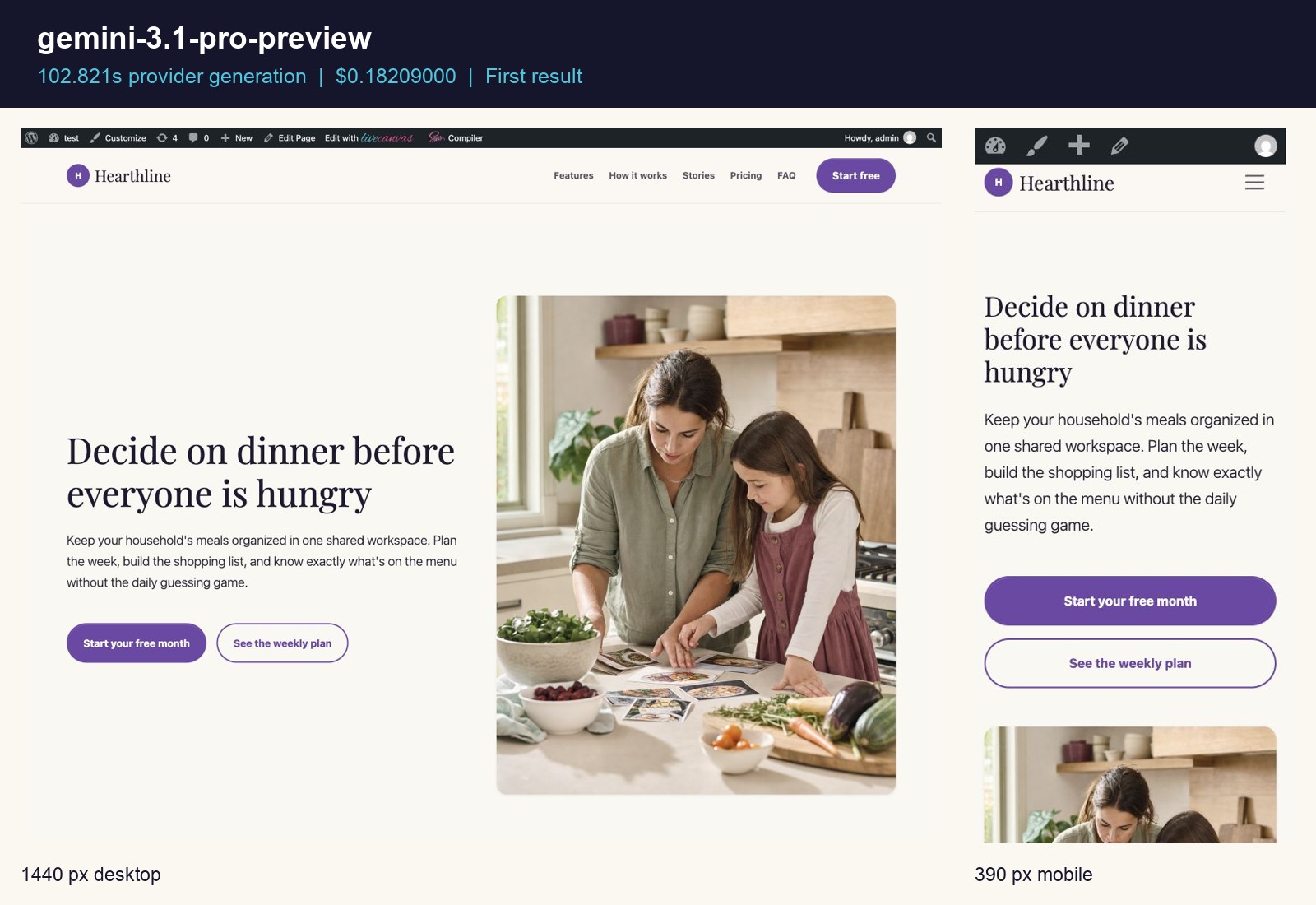
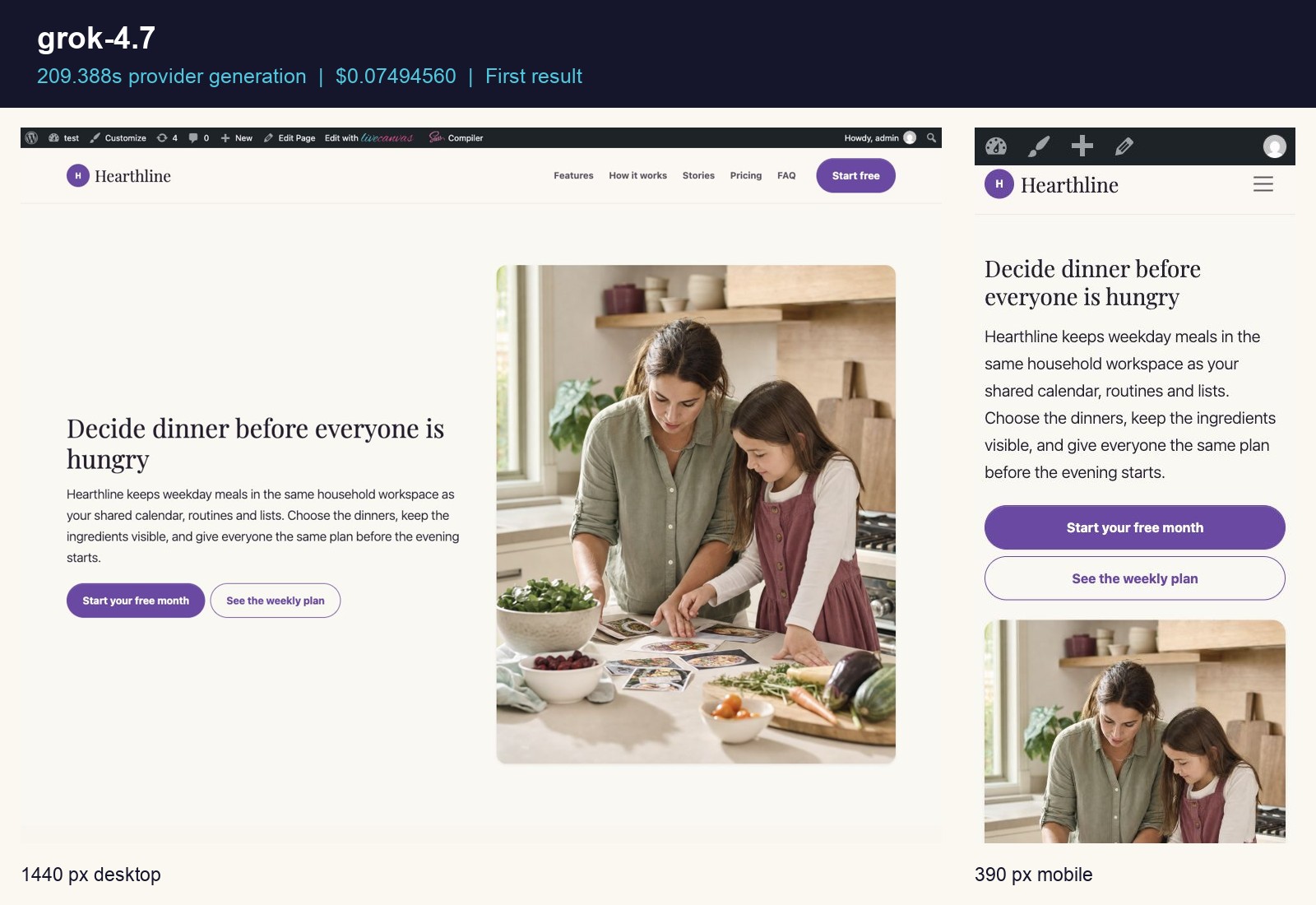
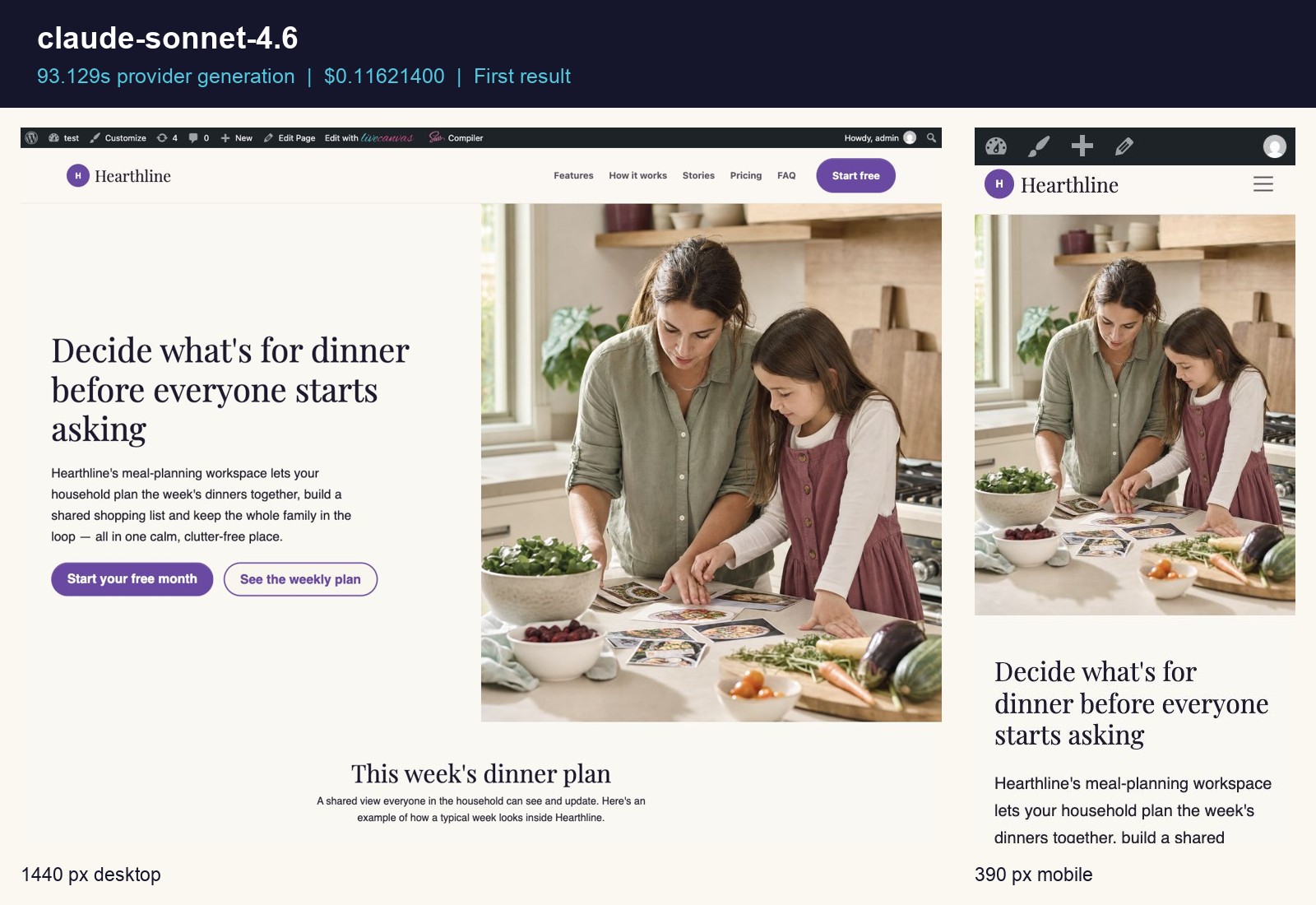
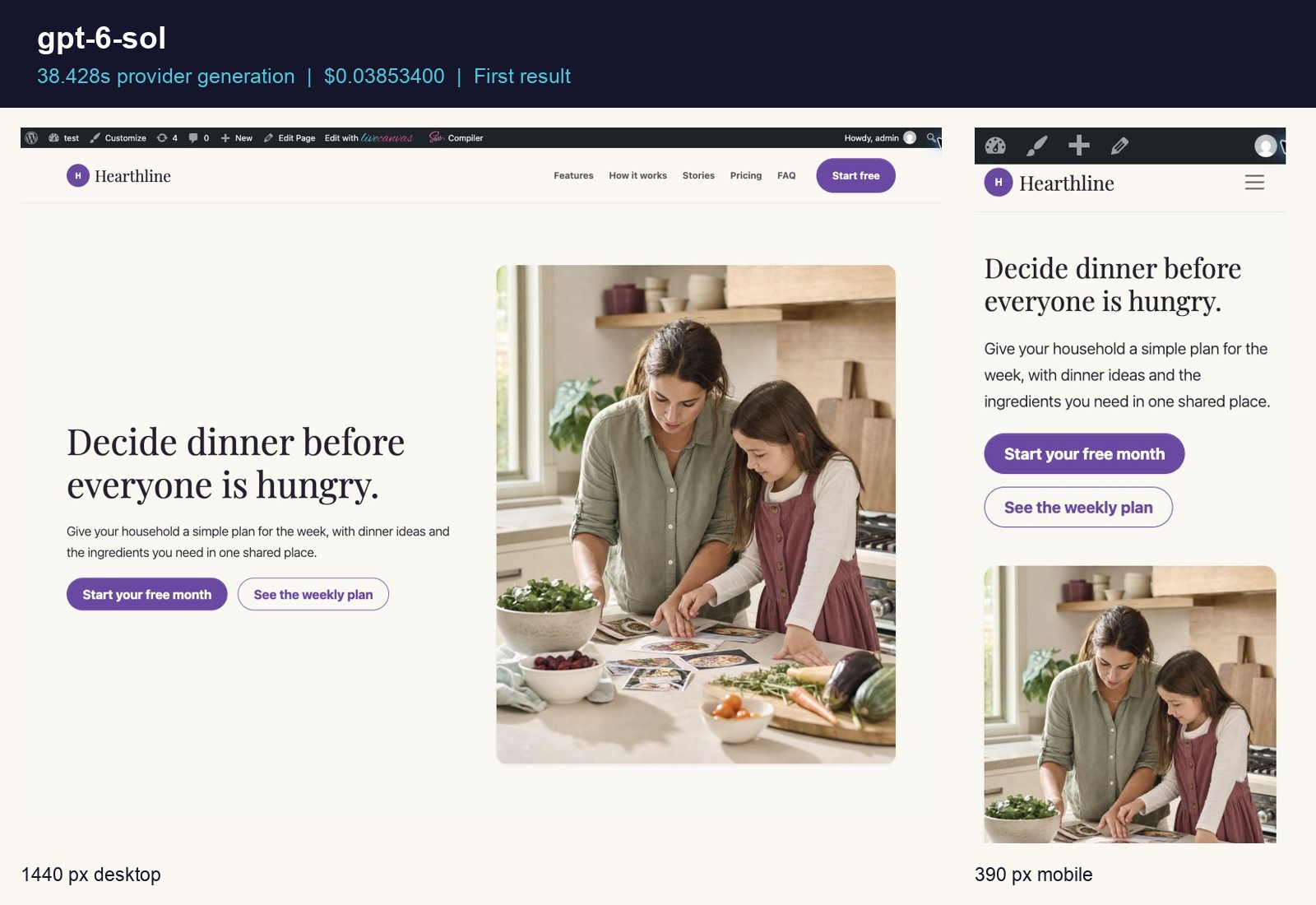
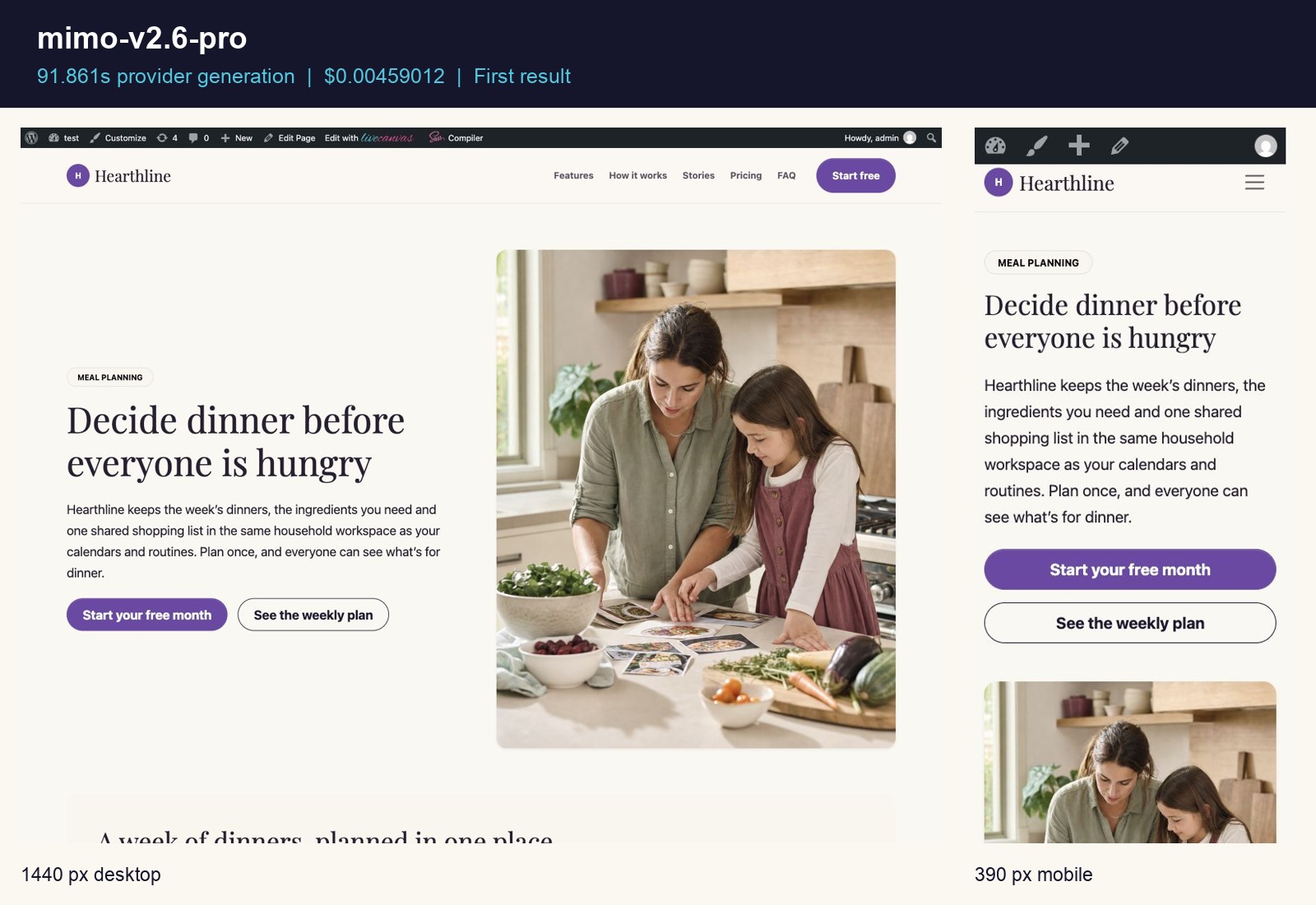
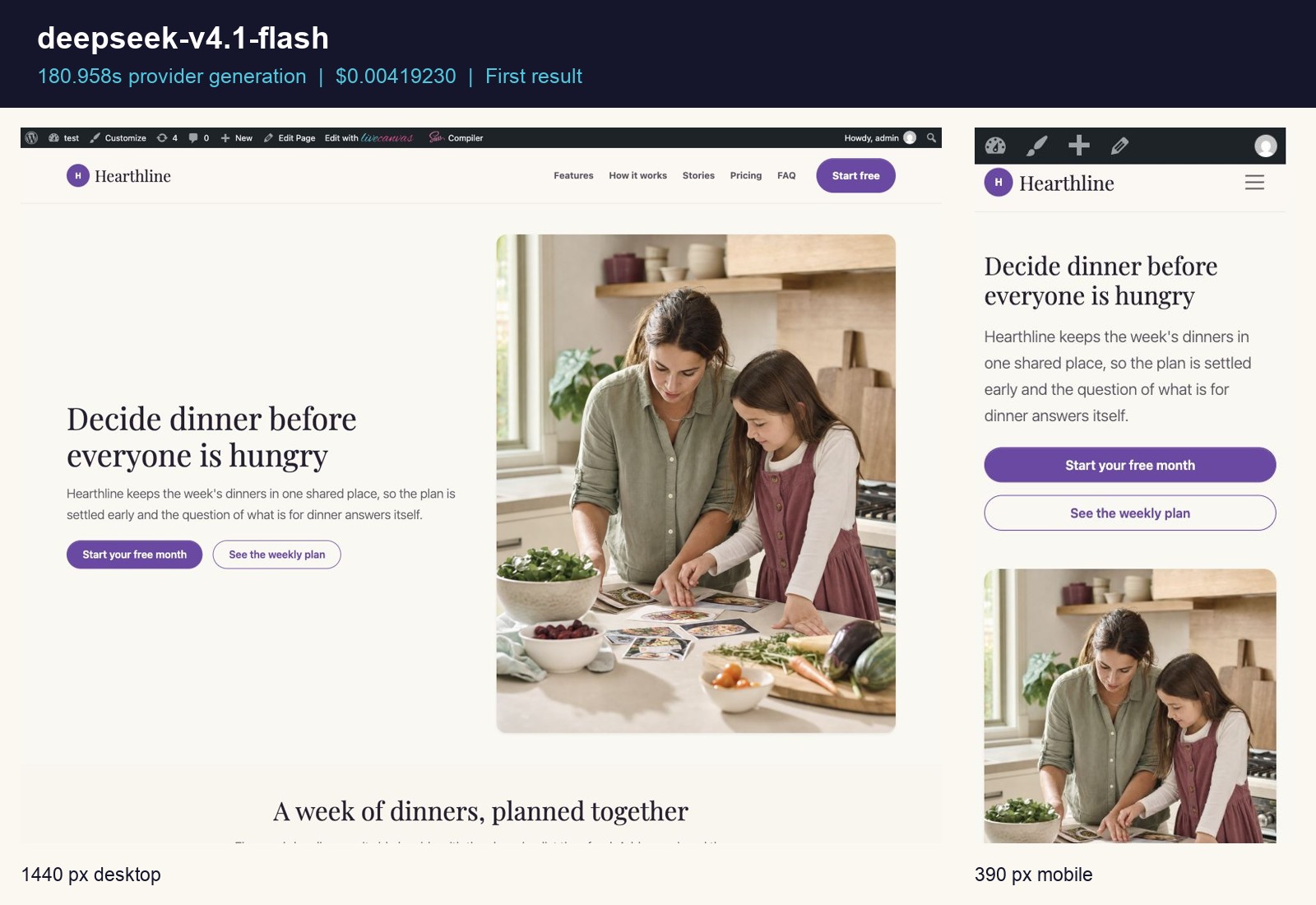
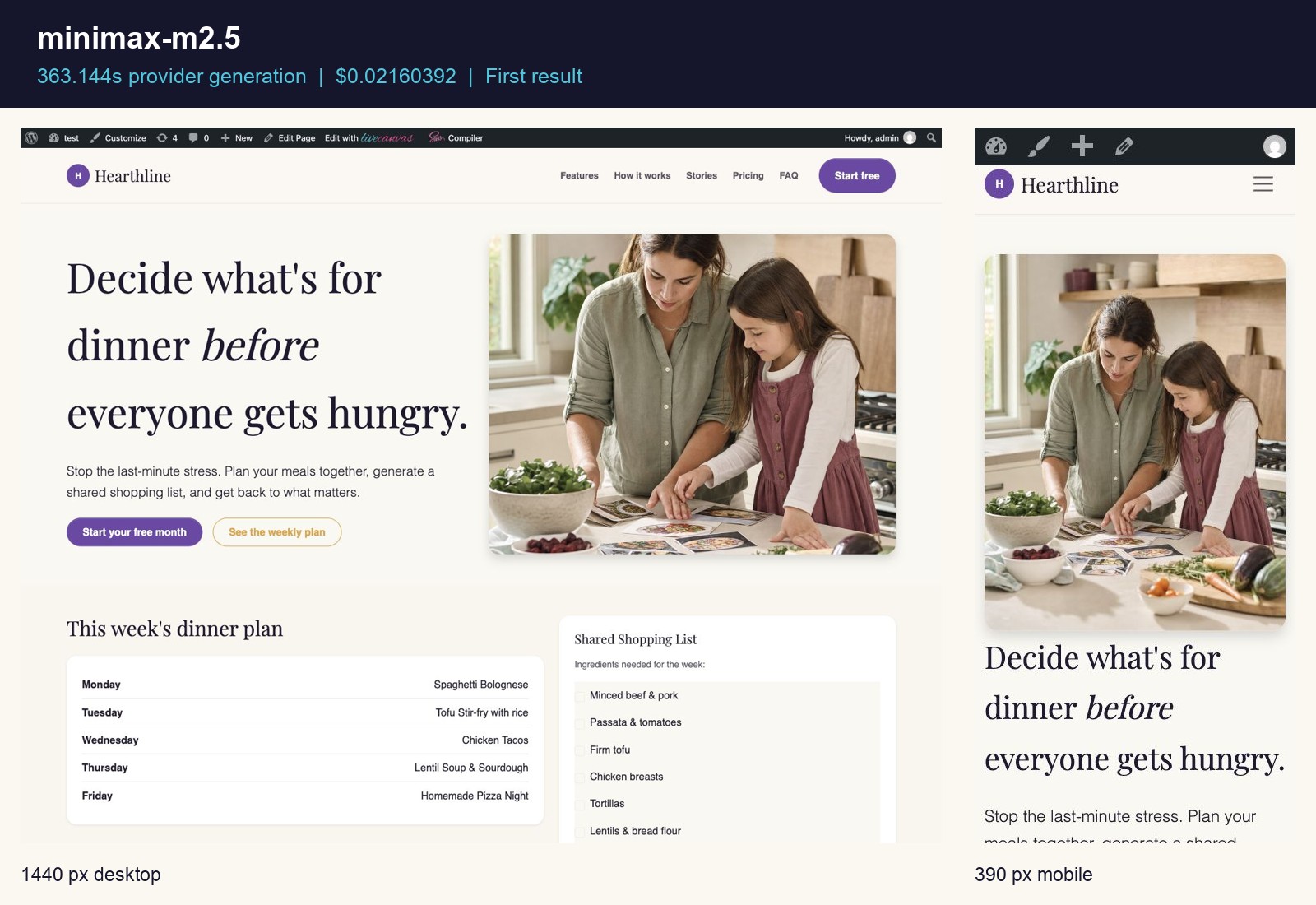
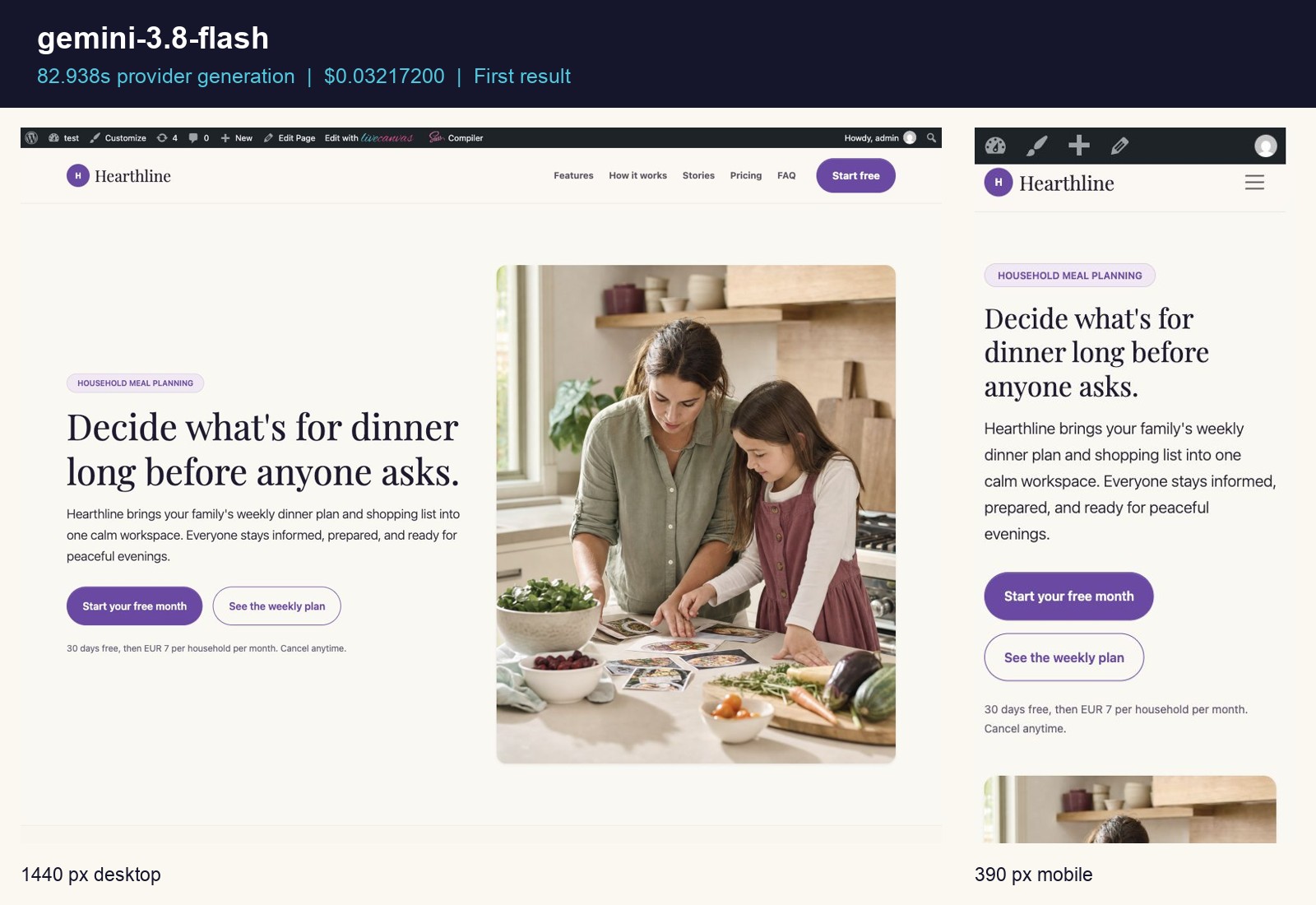
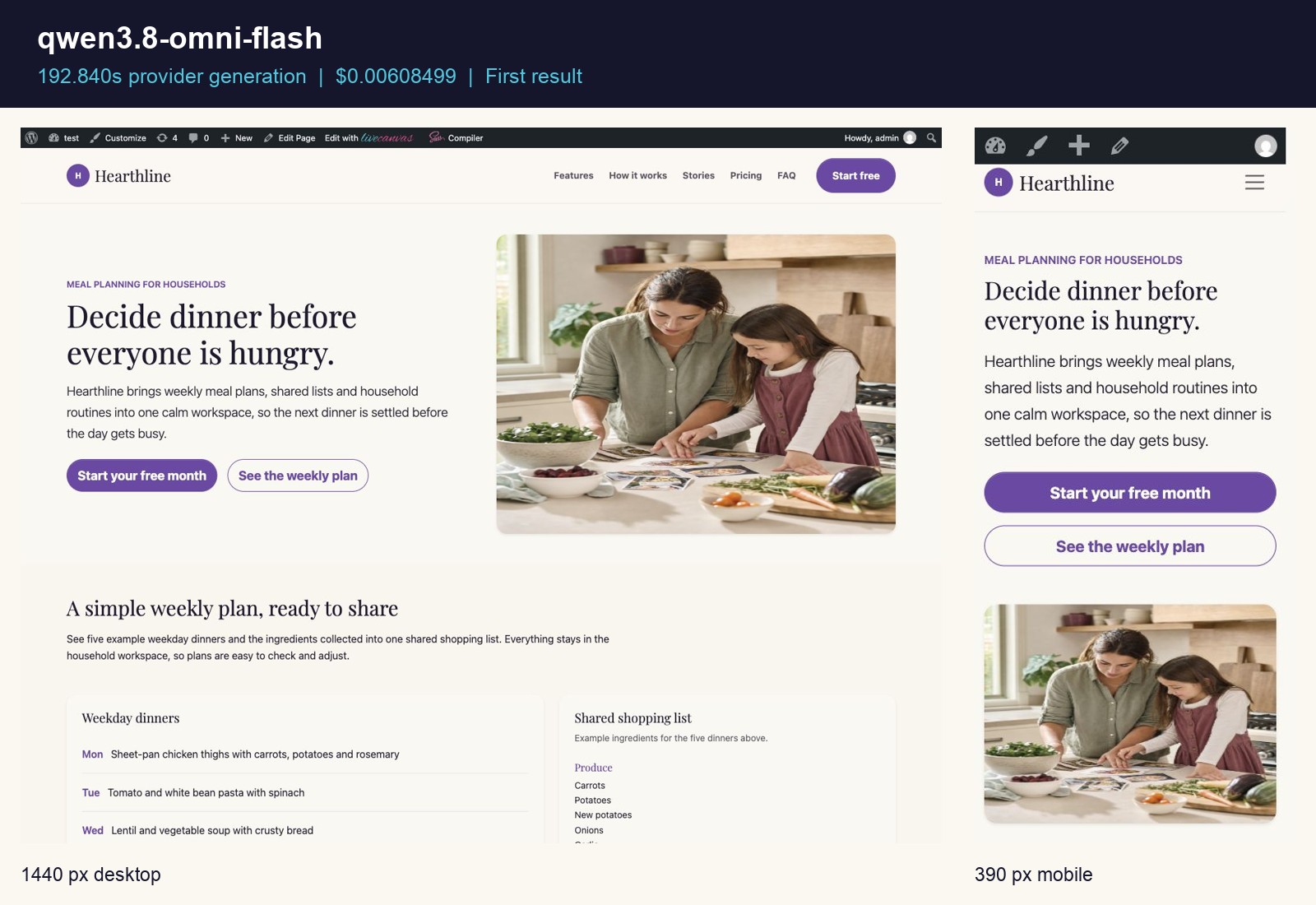
The screenshots show different compositions built from that shared direction. Familiar colours and typography carry through the results because the brief gives the model concrete design constraints and the theme provides the fonts. For your own site, the same idea applies: describe the page you need using the design and product facts you have already settled.
How much does an AI-generated WordPress page cost?
In this experiment, the paid page-generation calls ranged from $0.0022517 to $0.22352. GPT-6 Luna had the lowest recorded paid charge and GPT-6 Astra the highest. The successful free endpoints recorded $0.00 in OpenRouter; the Gemma request used a BYOK route, which is noted with the free results below.
Those figures pay for one model response. They describe the cost of generating the initial HTML, separate from the cost of a finished page. A production budget also has to cover the developer's review and any further requests, alongside the site's normal software and hosting costs. No new images were generated in these calls.
Time varied too. The fastest provider generation took 22.334 seconds; the slowest successful one took 363.144 seconds, just over six minutes. That gives a more useful expectation than promising that every model finishes in a few seconds. Choosing a model can change how long you wait as well as what the first draft costs.
Compare the first results
All 21 successful calls from 23 September 2026. Cyan bars show the recorded charge in USD. Magenta bars show provider generation time. Shorter bars mean a lower charge or a shorter wait.
Each model also has a layout check at 390 px and 1440 px. Eight pages fit both widths; 13 had 12 px of mobile overflow. This checks horizontal overflow only. Visual quality has no common score in this test.

Both bar scales start at zero and stay fixed when sorted: $0 to $0.25 for cost, 0 to 400 seconds for time. Values are individual calls, before saving and review. A $0.00 charge has no filled cost bar. Gemma used a BYOK route, so its OpenRouter charge does not establish a zero total cost.
Laguna S 2.1 returned HTTP 429 twice. Its missing cost and generation time are excluded from the bars. OpenRouter Free router reached Nemotron and is a separate call, so the rows count tested options.
Which AI model would we use for this page?
For this particular brief, Qwen3 Coder would be our first option to try again. It was the fastest successful call, cost less than one cent and had no horizontal overflow at either tested width. Its claim that ingredients would appear automatically on the shopping list was unsupported by the brief, so the copy still needed attention.
If the smallest paid generation charge were the priority, GPT-6 Luna would be worth a look. It cost $0.0022517 and took 47.557 seconds of provider generation, although its page had a small mobile overflow. Among the free options, North Mini Code produced an editable page that fit both widths, with copy that needed revision.
These observations help narrow a choice for a similar page. A single brief cannot establish the best AI model for every WordPress project. We did not score visual quality on a common scale or repeat runs to estimate average speed. A developer working on complex changes may value different capabilities, and this experiment only measured initial page generation.
The results, model by model
The tables group the shortlist into frontier models, default candidates and open weight options, followed by the lower-cost and free categories. Each row shows OpenRouter's recorded provider generation time and actual usage charge. These are individual calls, excluding briefing, saving and review.
Output tokens include reasoning tokens when the provider reports them that way. The reasoning column is a subset of output, so it should not be added again. We kept the default reasoning settings and allowed provider routing. That reflects this Assistant session, with the exact provider and model identifiers preserved in the data below.
The 21 successful calls totalled $0.888410305 in recorded usage. Laguna returned HTTP 429 on its initial attempt and one retry. We found no matching generation metrics for those failed attempts in the activity view, so their token counts, costs and generation time remain unavailable.
Frontier models
The frontier calls generated pages with the same supplied design context. Their costs ranged from $0.0749456 to $0.22352 in this run. This page brief does not test large refactors or end-to-end software development.
| Model | Input tokens | Output tokens | Reasoning within output | Generation, s | Actual cost, USD |
|---|---|---|---|---|---|
 Claude Opus 5.5 Claude Opus 5.5 |
1,322 | 7,243 | 433 | 56.768 | $0.150148 |
 GPT-6 Astra GPT-6 Astra |
822 | 4,306 | 197 | 73.218 | $0.22352 |
 Gemini 3.1 Pro Preview Gemini 3.1 Pro Preview |
871 | 15,029 | 10,228 | 102.821 | $0.18209 |
 Grok 4.7 Grok 4.7 |
2,084 | 15,207 | 11,747 | 209.388 | $0.0749456 |
Default candidates
Sonnet and Sol both generated the requested page. Sol used fewer output tokens and completed generation sooner in this run. An iteration test would be needed before calling either the best everyday model for every LiveCanvas task.
| Model | Input tokens | Output tokens | Reasoning within output | Generation, s | Actual cost, USD |
|---|---|---|---|---|---|
| Claude Sonnet 4.6 |
913 | 7,565 | 0 | 93.129 | $0.116214 |
| GPT-6 Sol |
822 | 3,689 | 825 | 38.428 | $0.038534 |
Open weight models
Qwen3 Coder was the fastest successful call in this set. MiMo and DeepSeek also produced pages for less than one US cent each. MiniMax and GLM spent much more of their output budget on reasoning.
| Model | Input tokens | Output tokens | Reasoning within output | Generation, s | Actual cost, USD |
|---|---|---|---|---|---|
 MiMo V2.6 Pro MiMo V2.6 Pro |
844 | 4,854 | 546 | 91.861 | $0.00459012 |
 Kimi K2.5 Kimi K2.5 |
828 | 5,872 | 1,003 | 195.962 | $0.0135846 |
 Qwen3 Coder Qwen3 Coder |
846 | 4,462 | 0 | 22.334 | $0.00821772 |
 DeepSeek V4.1 Flash DeepSeek V4.1 Flash |
860 | 9,695 | 4,660 | 180.958 | $0.0041923 |
 MiniMax M2.5 MiniMax M2.5 |
835 | 17,798 | 13,970 | 363.144 | $0.021603925 |
 GLM 5.3 Flash GLM 5.3 Flash |
829 | 20,274 | 15,759 | 240.867 | $0.01026135 |
Maximum savings candidates
GPT-6 Luna had the lowest recorded cost among the paid calls. Gemini 3.8 Flash cost $0.032172 here. The category describes the shortlist we tested; it is not a ranking of the final bill.
| Model | Input tokens | Output tokens | Reasoning within output | Generation, s | Actual cost, USD |
|---|---|---|---|---|---|
| GPT-6 Luna |
822 | 4,339 | 873 | 47.557 | $0.0022517 |
| Gemini 3.8 Flash |
871 | 8,405 | 2,362 | 82.938 | $0.032172 |
Budget multimodal
Qwen3.8 Omni Flash generated HTML from the same text prompt. We did not send an image, audio or video input in this test, so this result does not measure its multimodal capabilities.
| Model | Input tokens | Output tokens | Reasoning within output | Generation, s | Actual cost, USD |
|---|---|---|---|---|---|
| Qwen3.8 Omni Flash |
908 | 12,657 | 8,743 | 192.840 | $0.00608499 |
Free models and the free router
Five named free endpoints produced pages. Laguna was rate-limited twice. The free router also produced a page and selected Nemotron 3 Ultra for that request. Its result belongs to that selected model and provider at that moment; a later router call can choose something else.
| Model | Input tokens | Output tokens | Reasoning within output | Generation, s | Actual cost, USD |
|---|---|---|---|---|---|
 Nemotron 3 Ultra (free) Nemotron 3 Ultra (free) |
877 | 7,108 | 1,405 | 298.243 | $0.00 |
 Laguna S 2.1 (free) Laguna S 2.1 (free) |
Unavailable | Unavailable | Unavailable | HTTP 429 twice | Unavailable |
 North Mini Code (free) North Mini Code (free) |
807 | 8,335 | 5,533 | 120.962 | $0.00 |
| Ling 3.0 Flash VL (free) | 899 | 15,785 | 7,509 | 210.597 | $0.00 |
 Gemma 4 31B (free) Gemma 4 31B (free) |
873 | 3,472 | 0 | 97.723 | $0.00 |
 Dots3 Note Preview (free) Dots3 Note Preview (free) |
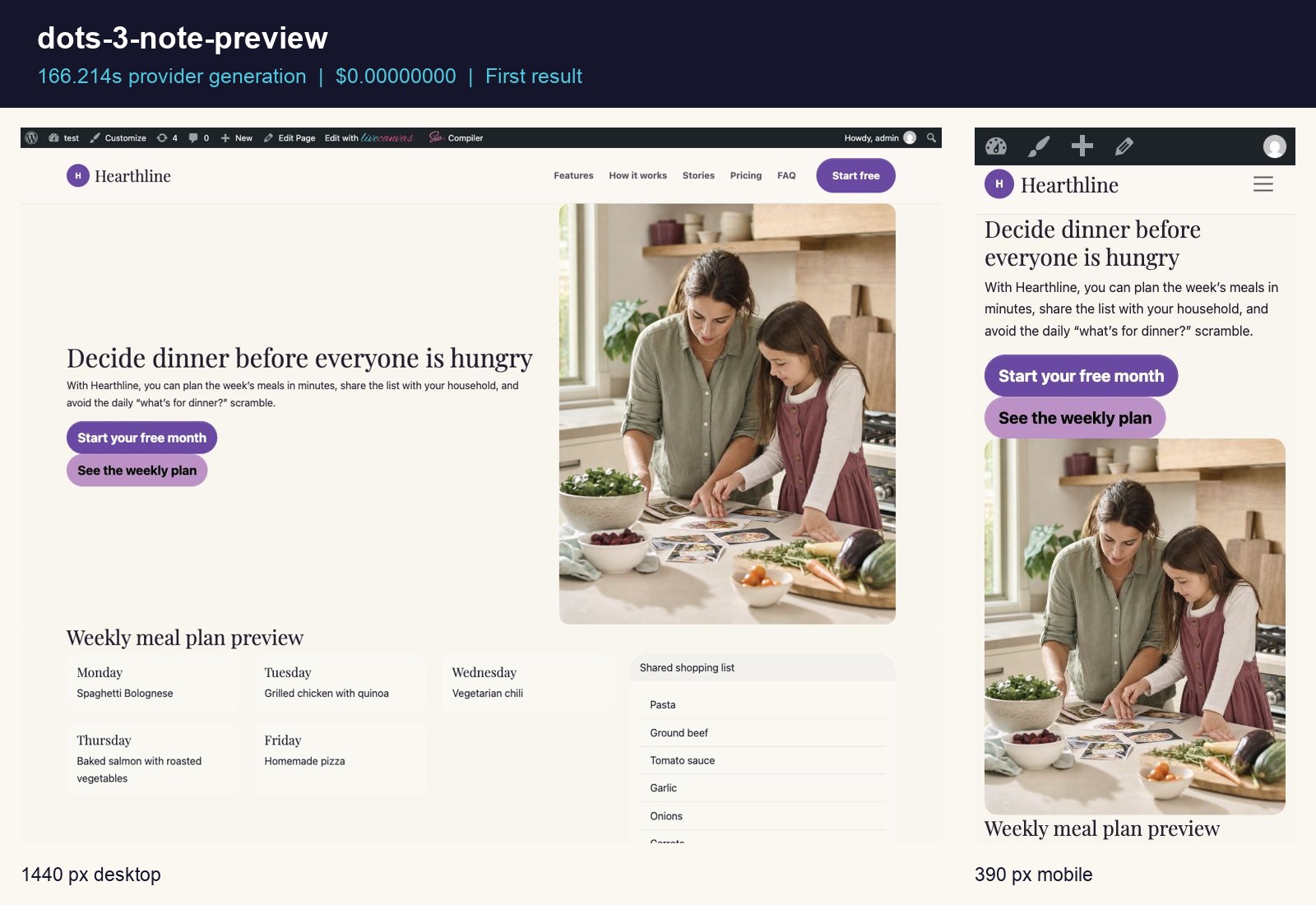
840 | 15,545 | 13,908 | 166.214 | $0.00 |
 OpenRouter Free router OpenRouter Free router |
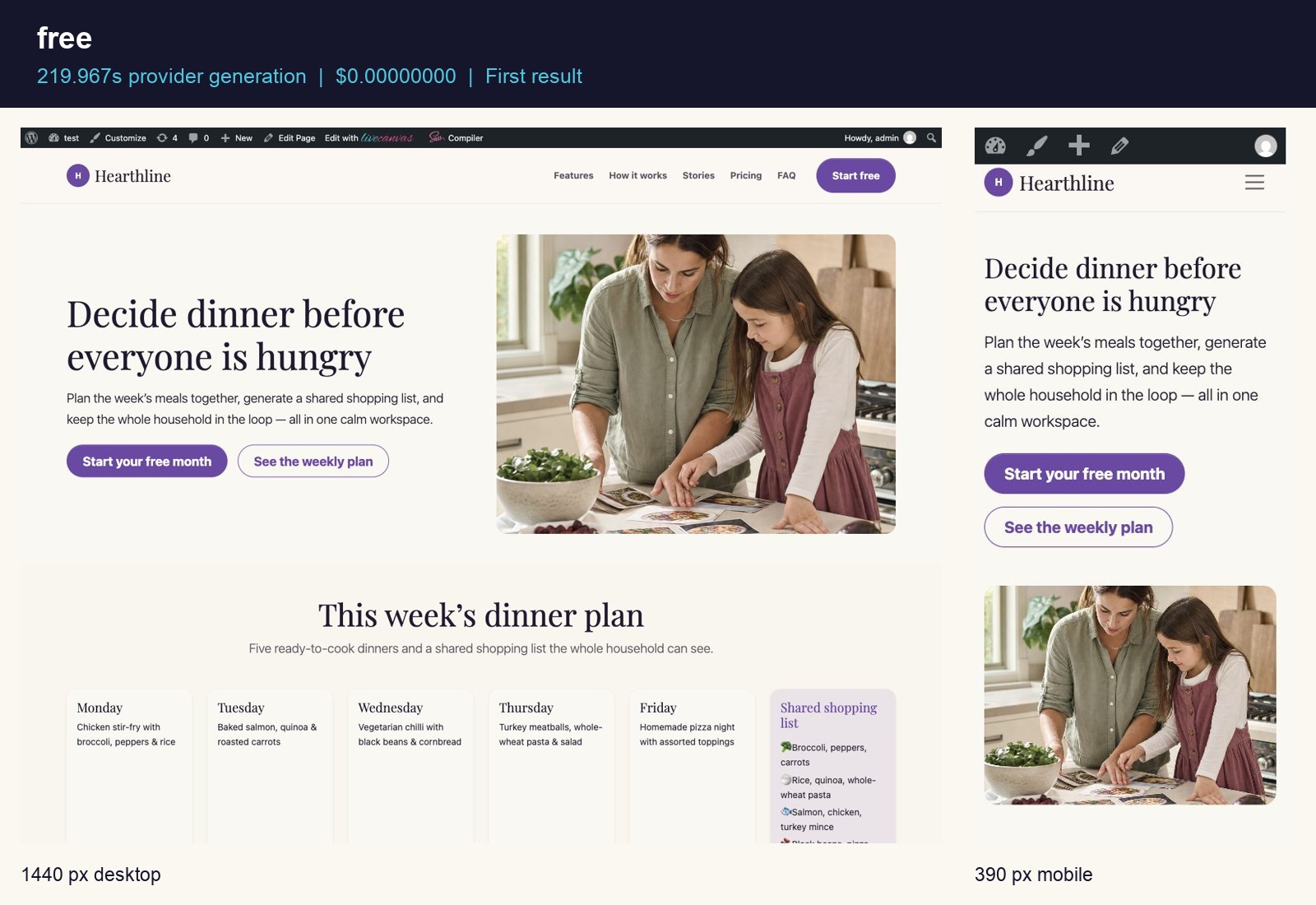
877 | 5,094 | 886 | 219.967 | $0.00 |
Gemma's free request was marked BYOK in the activity log, with zero recorded usage and zero upstream usage. The other successful free requests used OpenRouter's free routing. Free availability and limits can change.
Where does the developer's work begin?
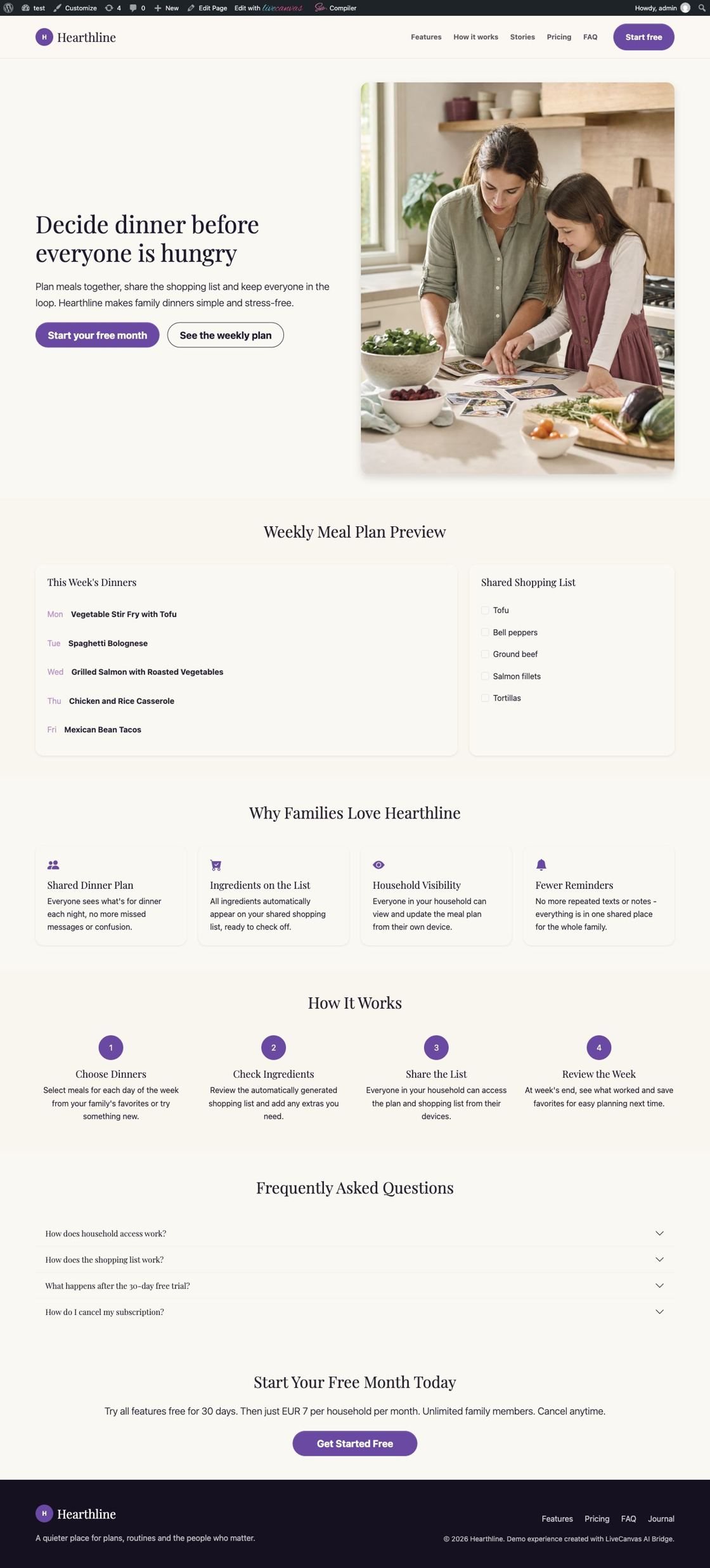
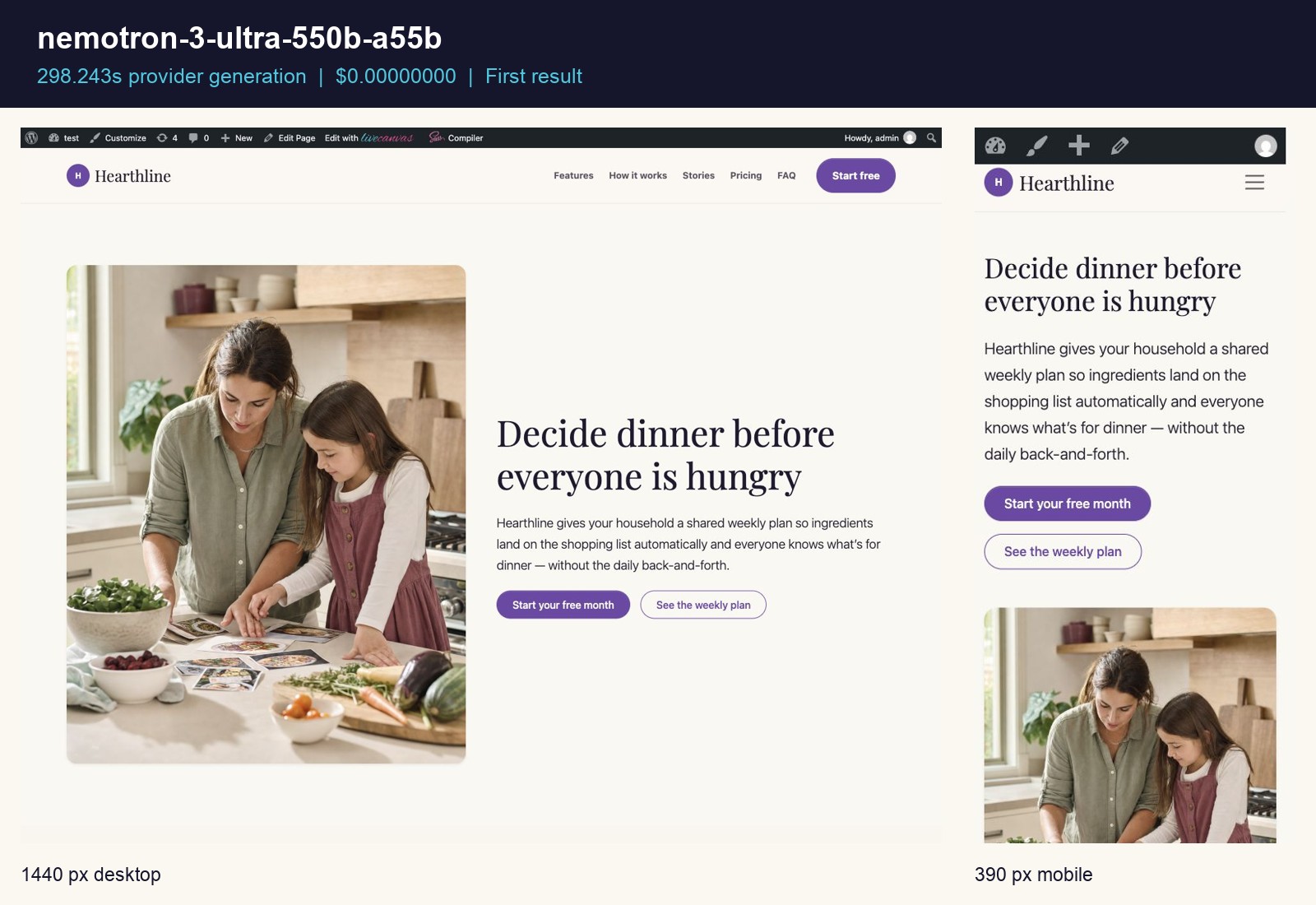
All 21 successful results had one H1 and loaded the existing image. Each contained four FAQ controls, and we verified that an FAQ could be toggled in each result. At 1440 px, none of the pages had horizontal overflow.
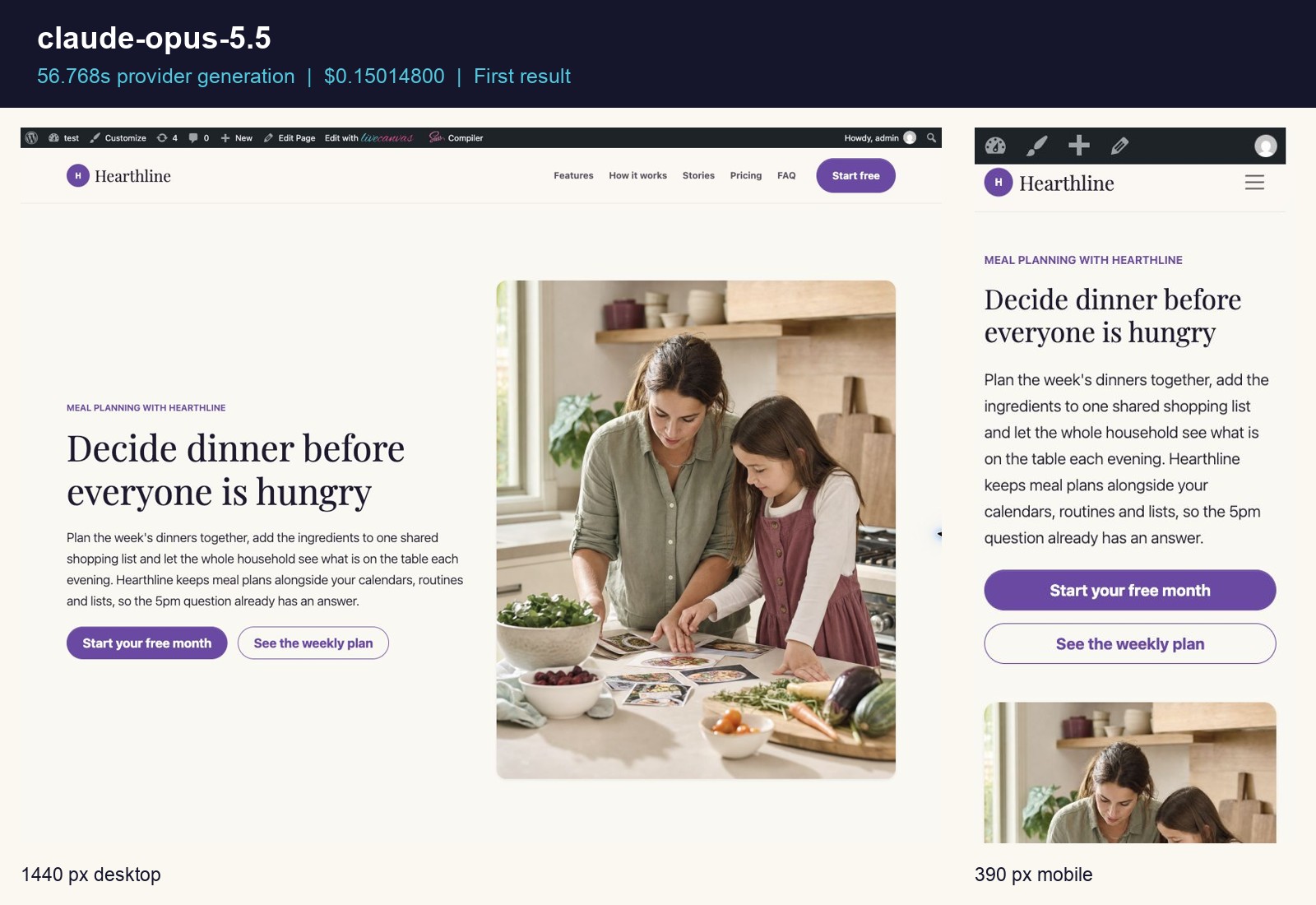
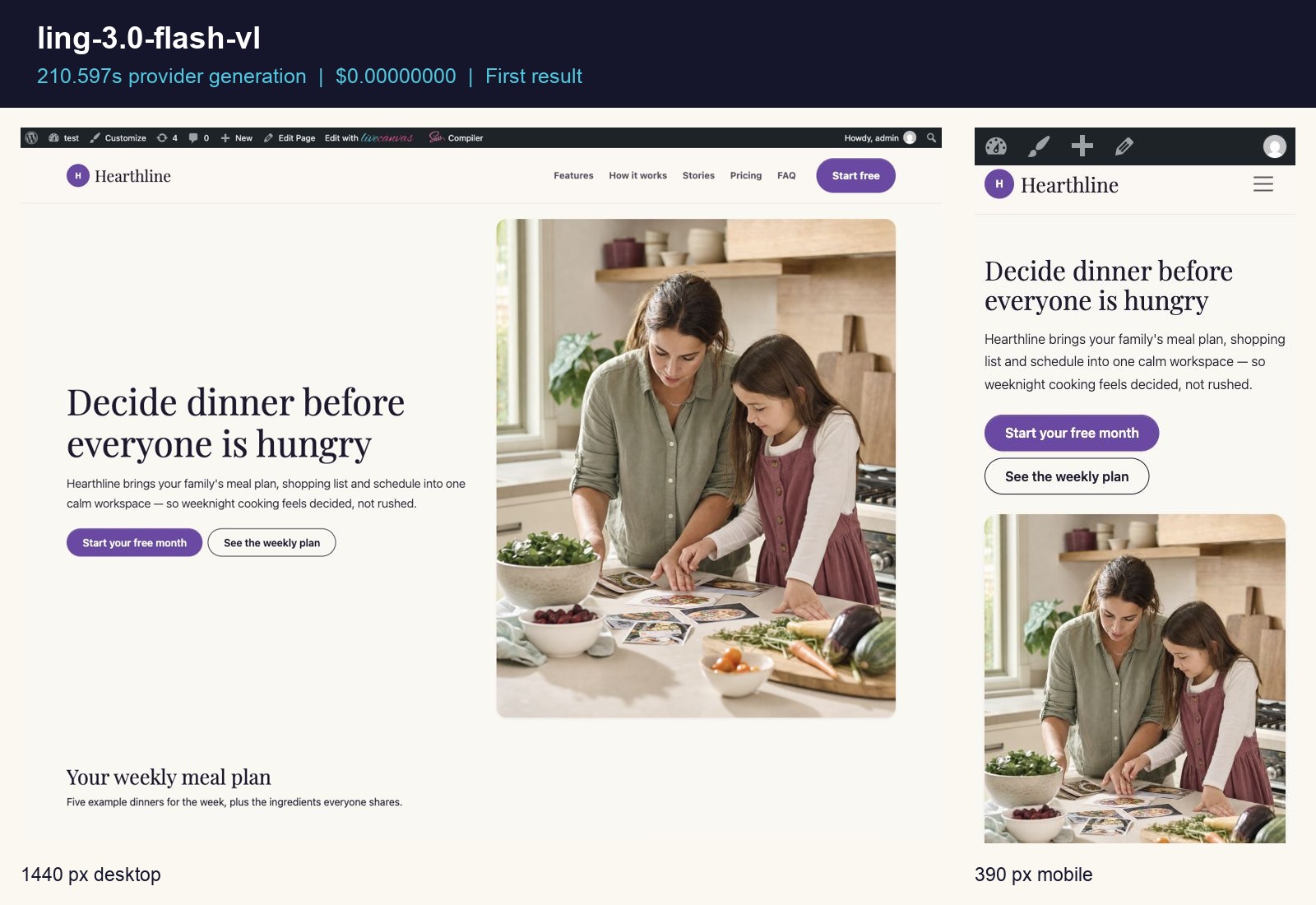
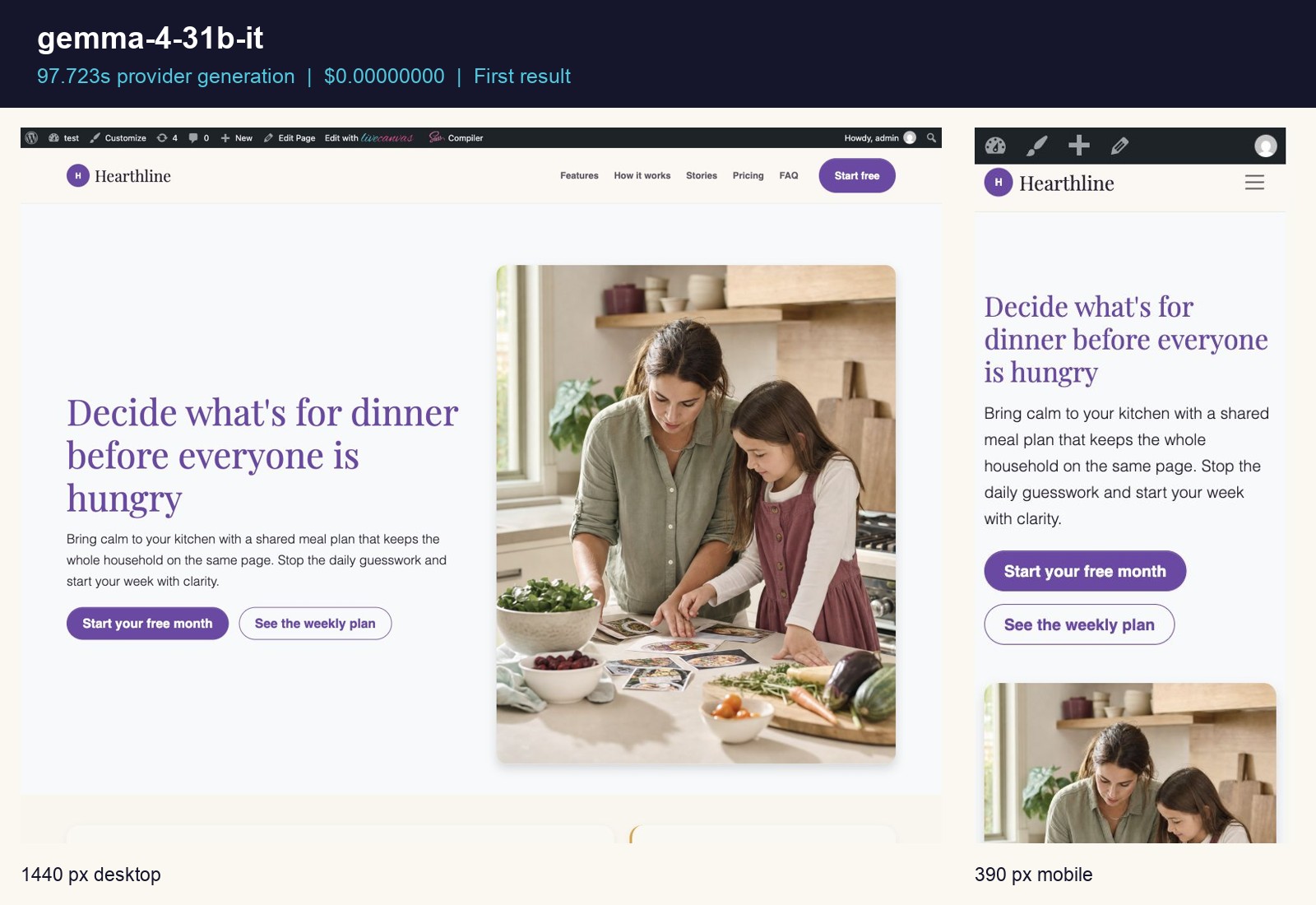
At 390 px, eight results stayed within the viewport: Grok, Sonnet, Qwen3 Coder, MiniMax, GLM, North, Ling and Dots. The other 13 measured 402 px wide, a 12 px overflow. That is a small layout correction, but it is still a correction. The screenshots and saved HTML preserve it.
Copy also needs a human check. Qwen3 Coder described ingredients appearing automatically on the shopping list, which the brief had not established. North made a similar claim and turned the instruction about the headline into the literal heading “About deciding dinner before everyone is hungry”. Dots jumped from H2 to H5 in parts of the page. We would correct these before publishing a client page.
These are familiar development decisions: adjust a container that runs past the phone viewport, rewrite a headline and remove a claim the product cannot support. The human part is also where a page gets its character. You may want a quieter hero, a different example meal or a stronger connection between two sections. With the draft already in LiveCanvas, you can make those choices in the visual editor or directly in the HTML.
A follow-up request to the Assistant is another option, with its own generation time and charge. We kept those iterations outside this experiment so the tables describe what the first call delivered. For a client project, the useful measure is how much work that draft saves after you have reviewed it.
Did the AI generate the images too?
No new image was generated in this benchmark. Every successful page used the same existing file, /wp-content/uploads/2026/08/hearthline-meal-planning-2.png. The models returned HTML containing an image reference. We supplied that reference in the prompt.
This distinction matters for both the comparison and the cost. The figures above cover the page-generation calls. They include no separate image-generation request. A model accepting image input does not mean that this endpoint produces image files; the tested catalogue entries listed text output.
If a page needs a new image, that becomes a separate step: create or choose the asset, upload it to WordPress, then give its URL to the Assistant. Its cost and production time should be recorded separately. For this test, reusing the site image kept that part of the brief identical.
Every generated result
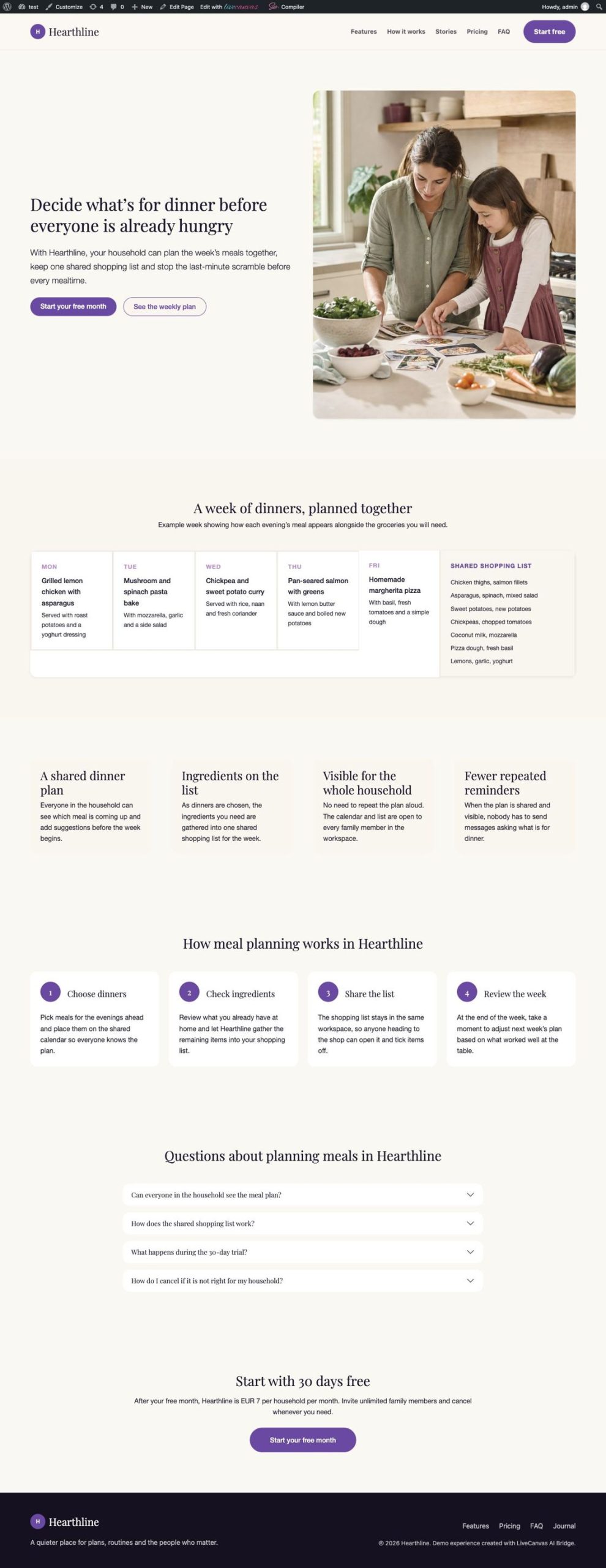
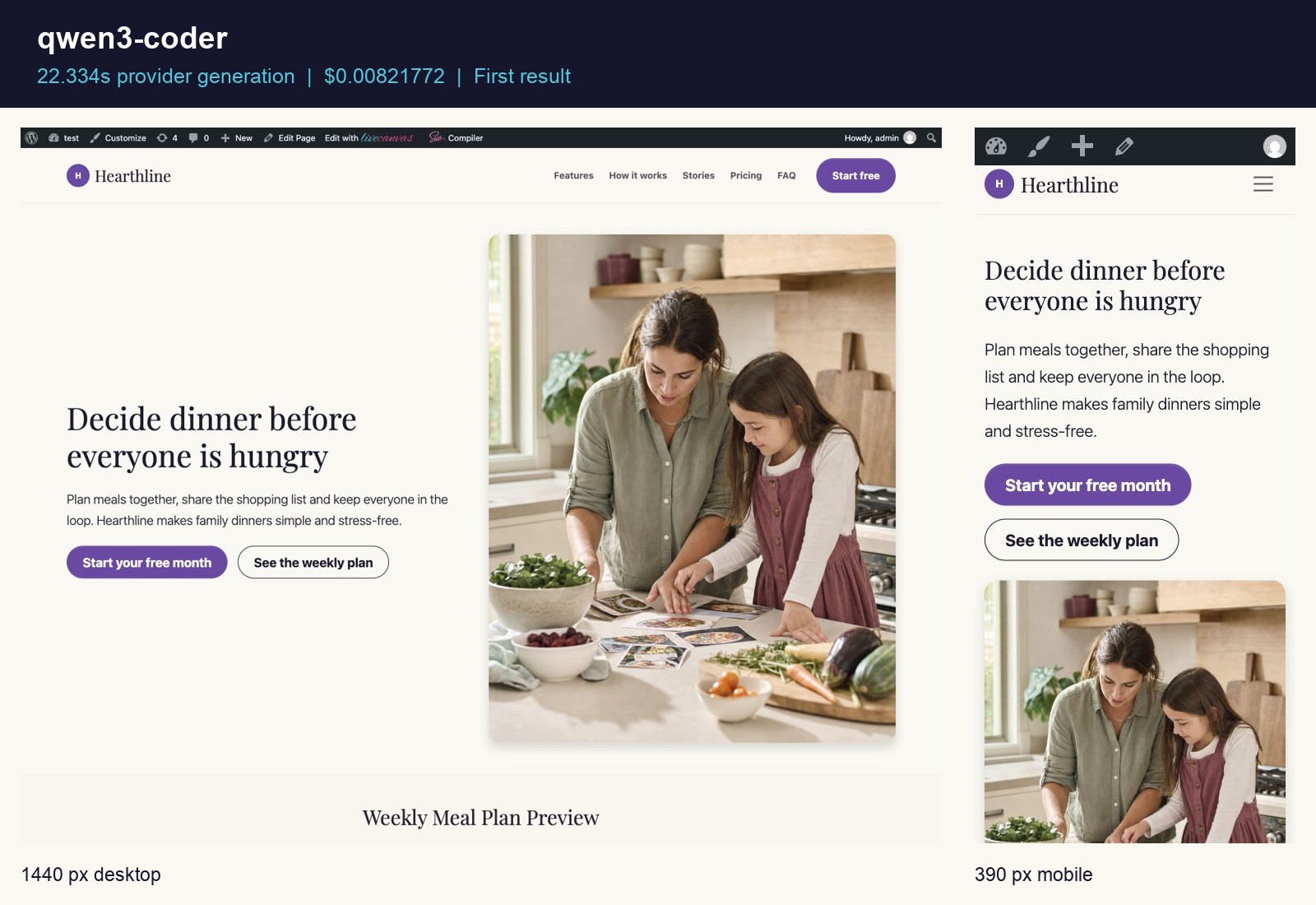
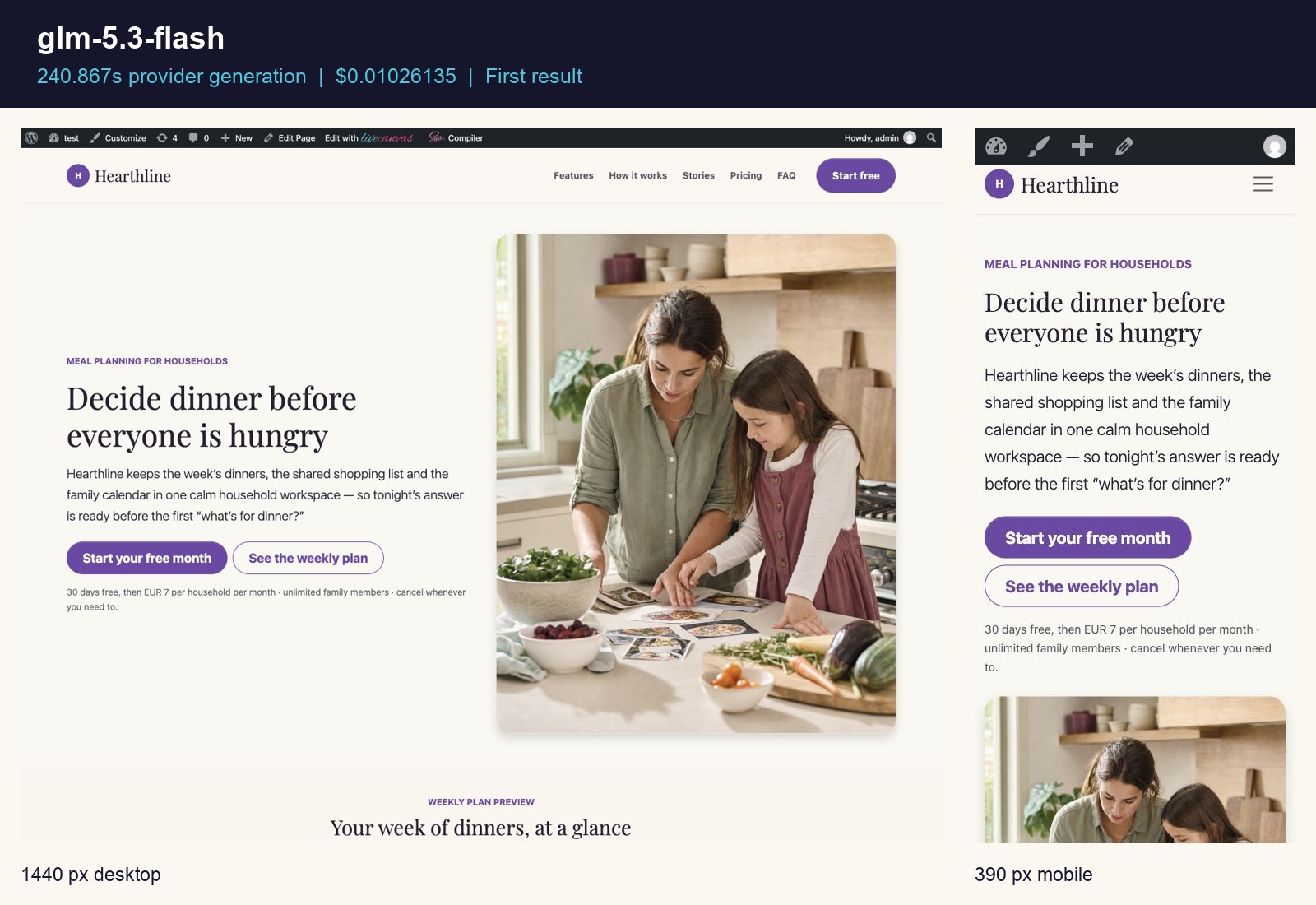
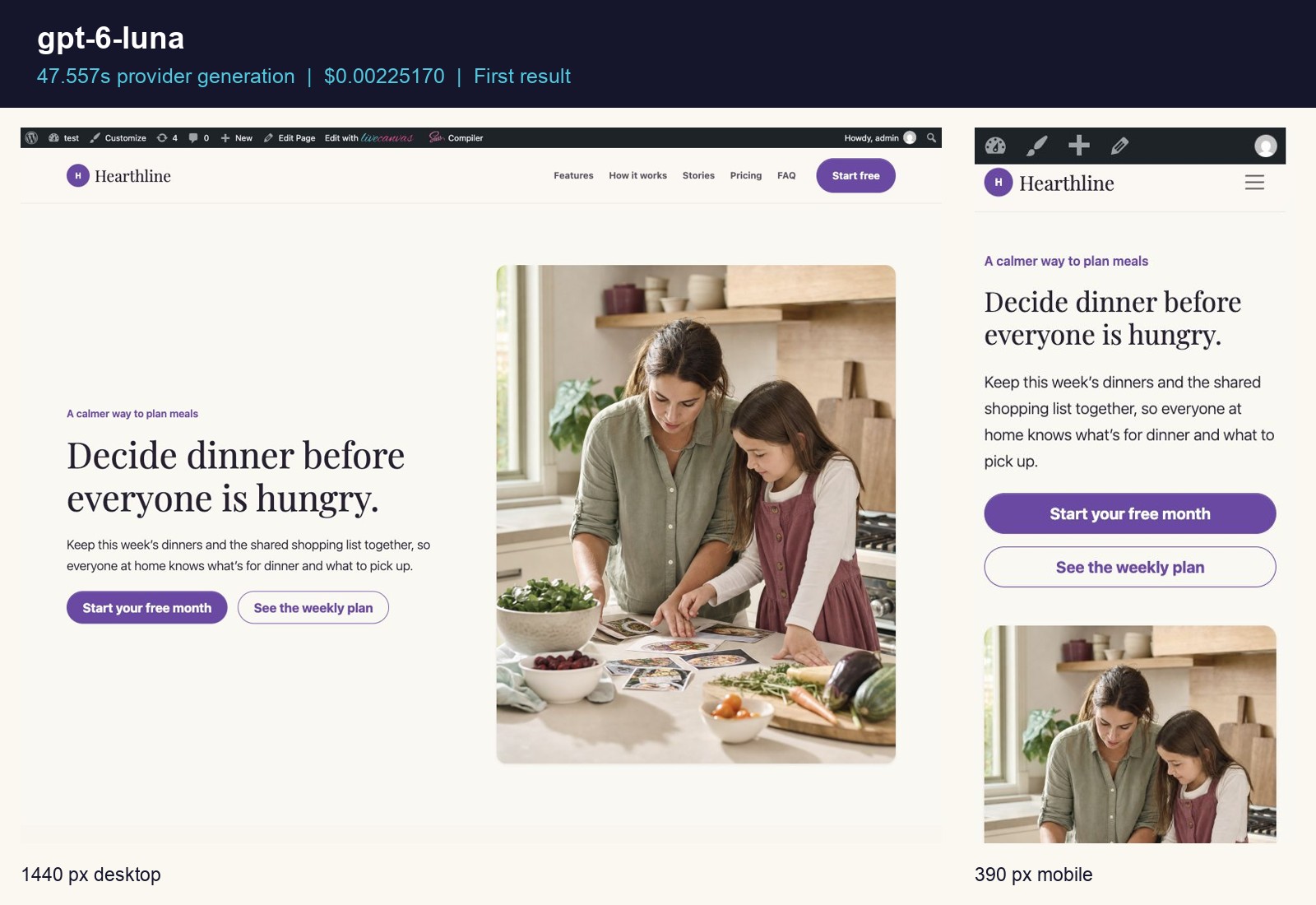
Open each comparison below to see the desktop and mobile captures. These images show the top of each first result. Each comparison also has links to the full-page desktop and mobile captures.
Claude Opus 5.5

GPT-6 Astra

Gemini 3.1 Pro Preview
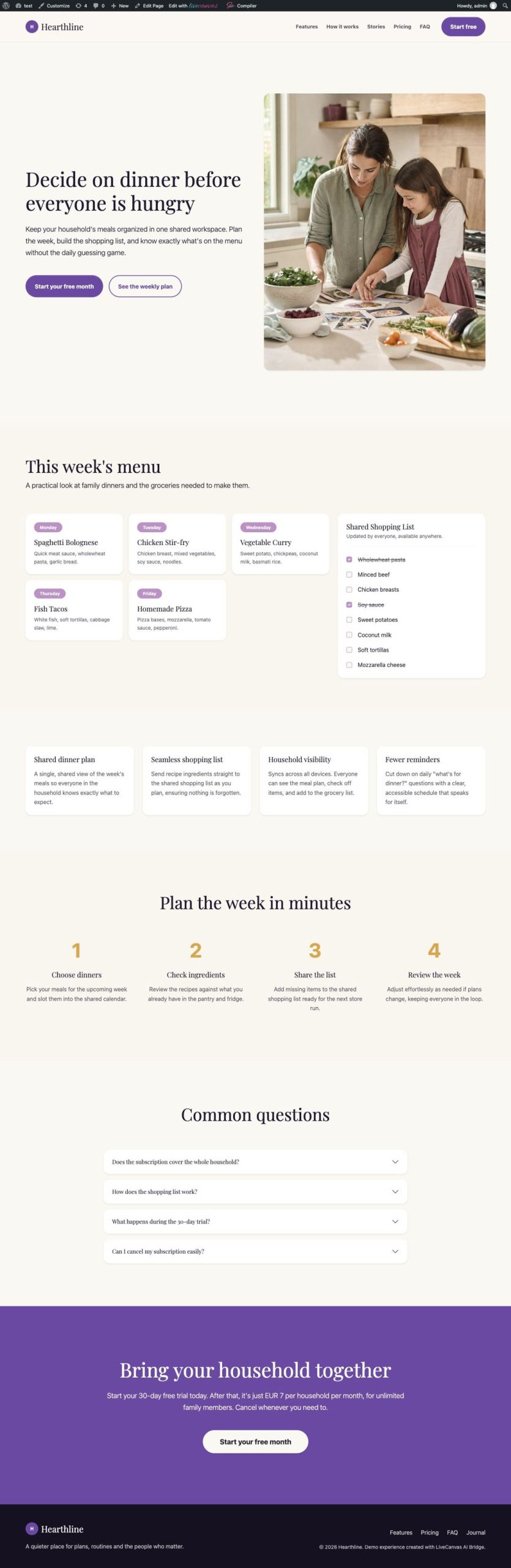

Grok 4.7
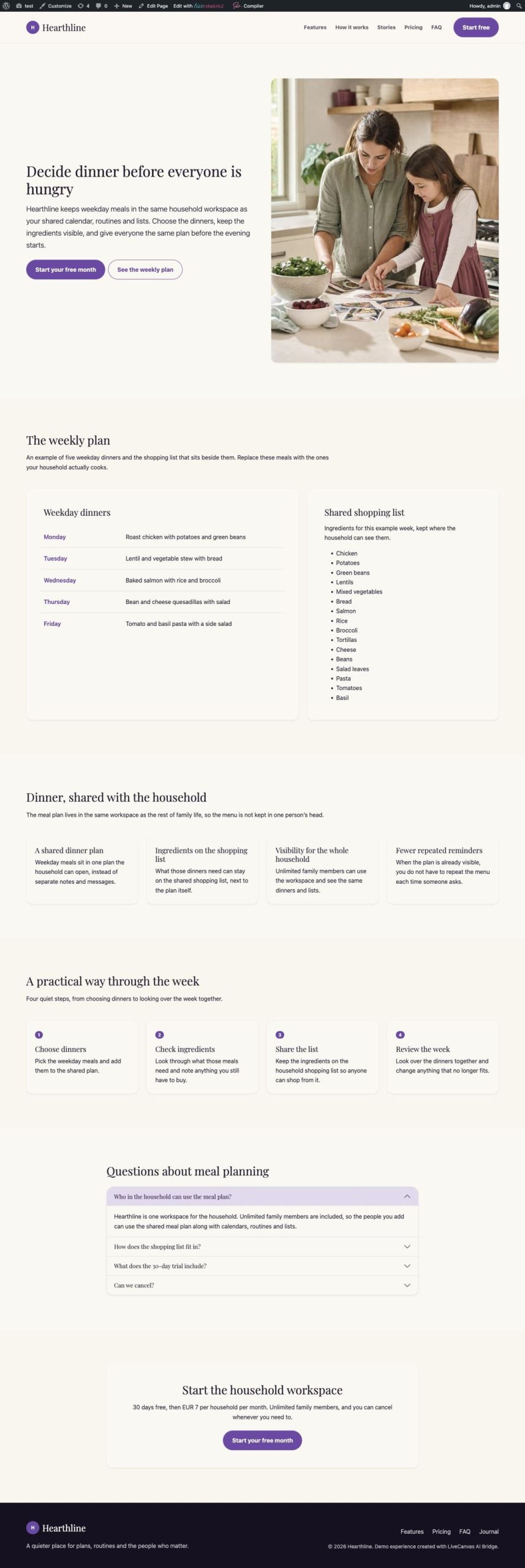

Claude Sonnet 4.6
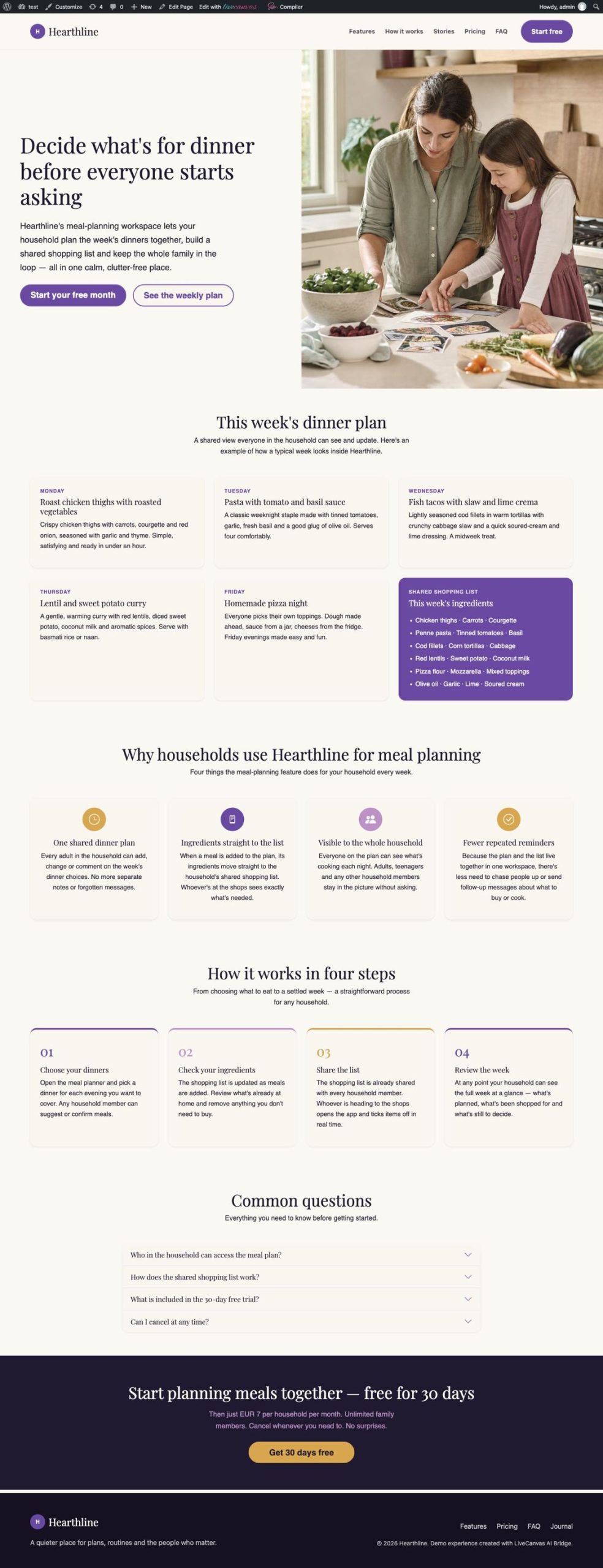

GPT-6 Sol
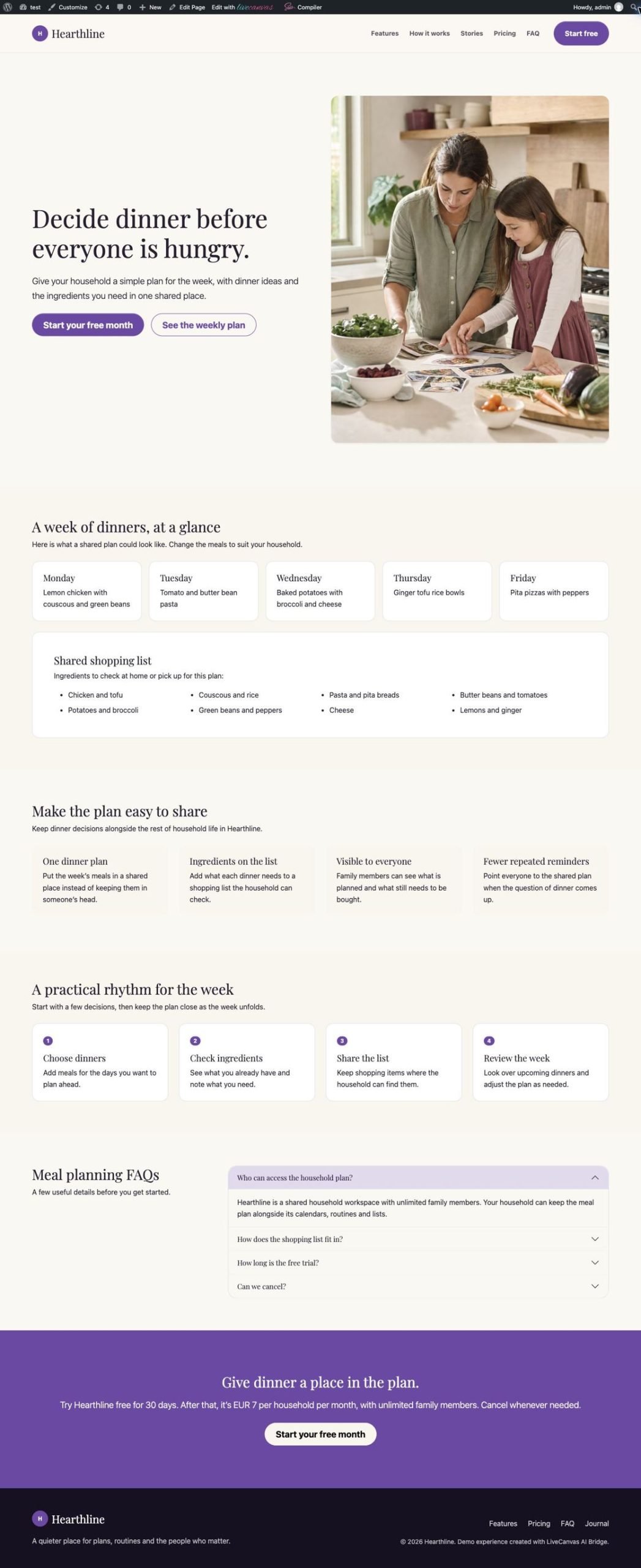

MiMo V2.6 Pro
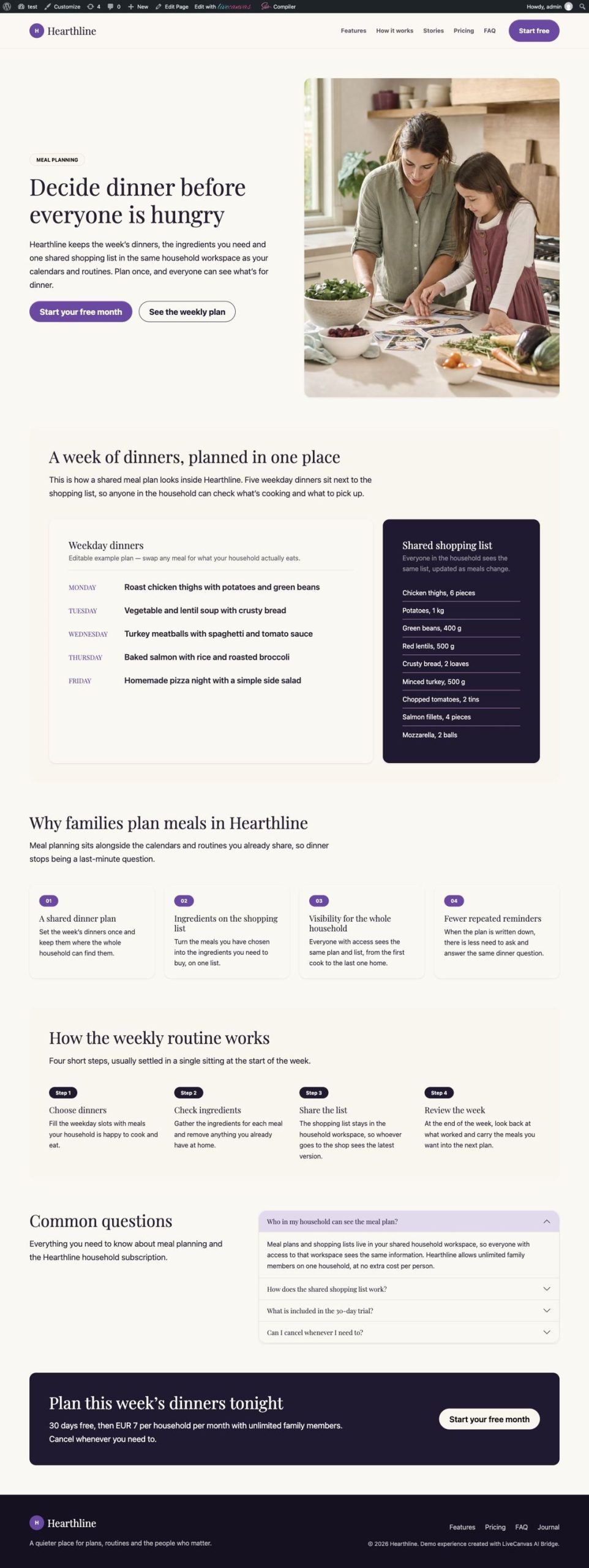

Kimi K2.5
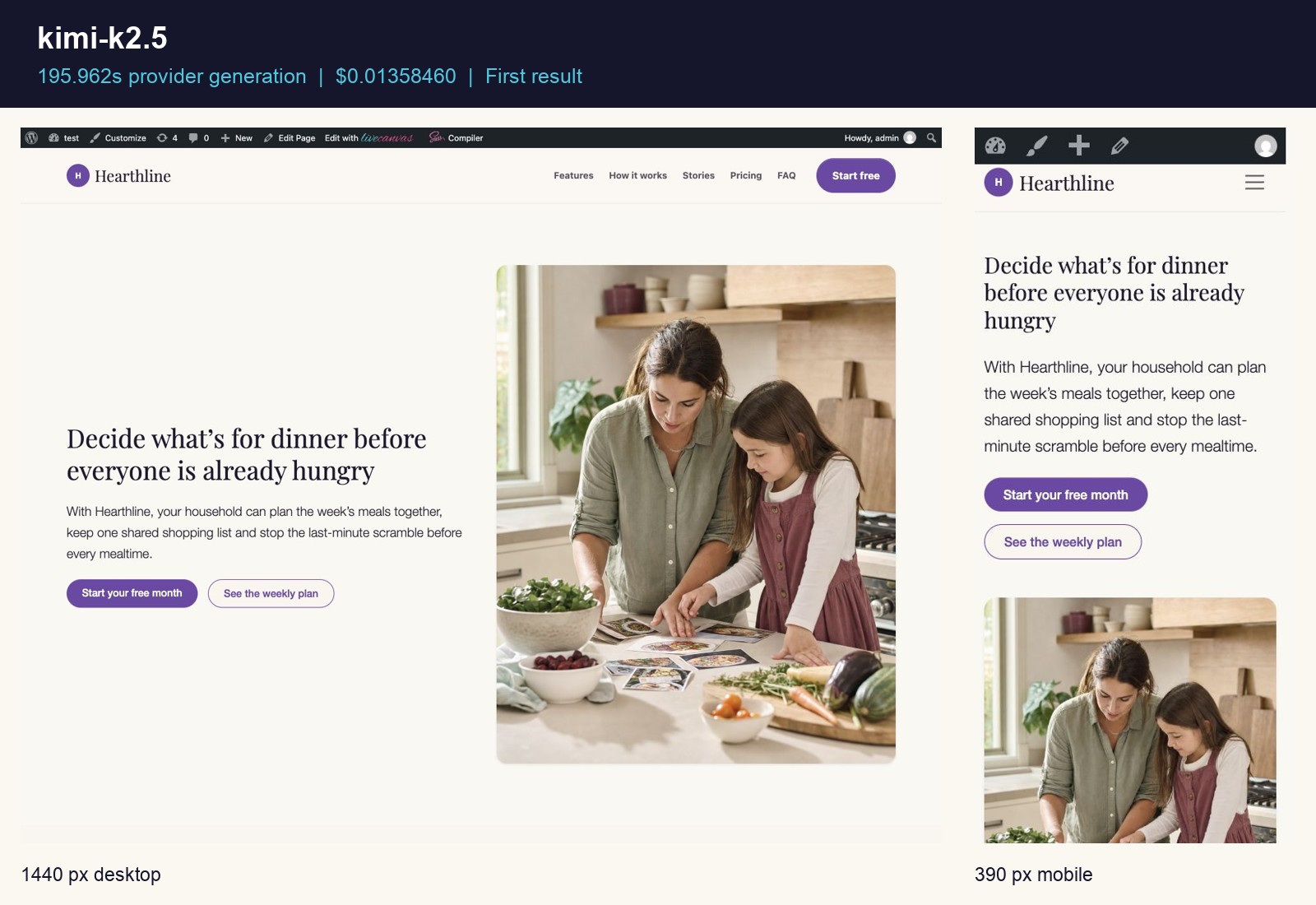

Qwen3 Coder

DeepSeek V4.1 Flash
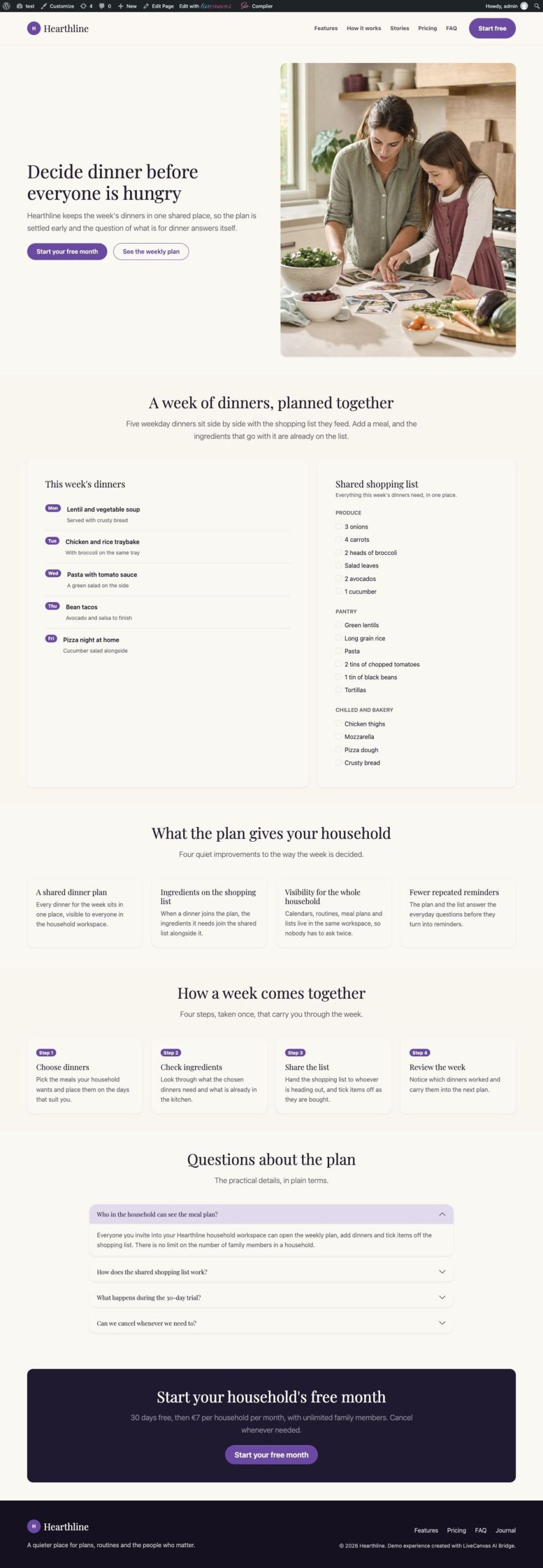

MiniMax M2.5
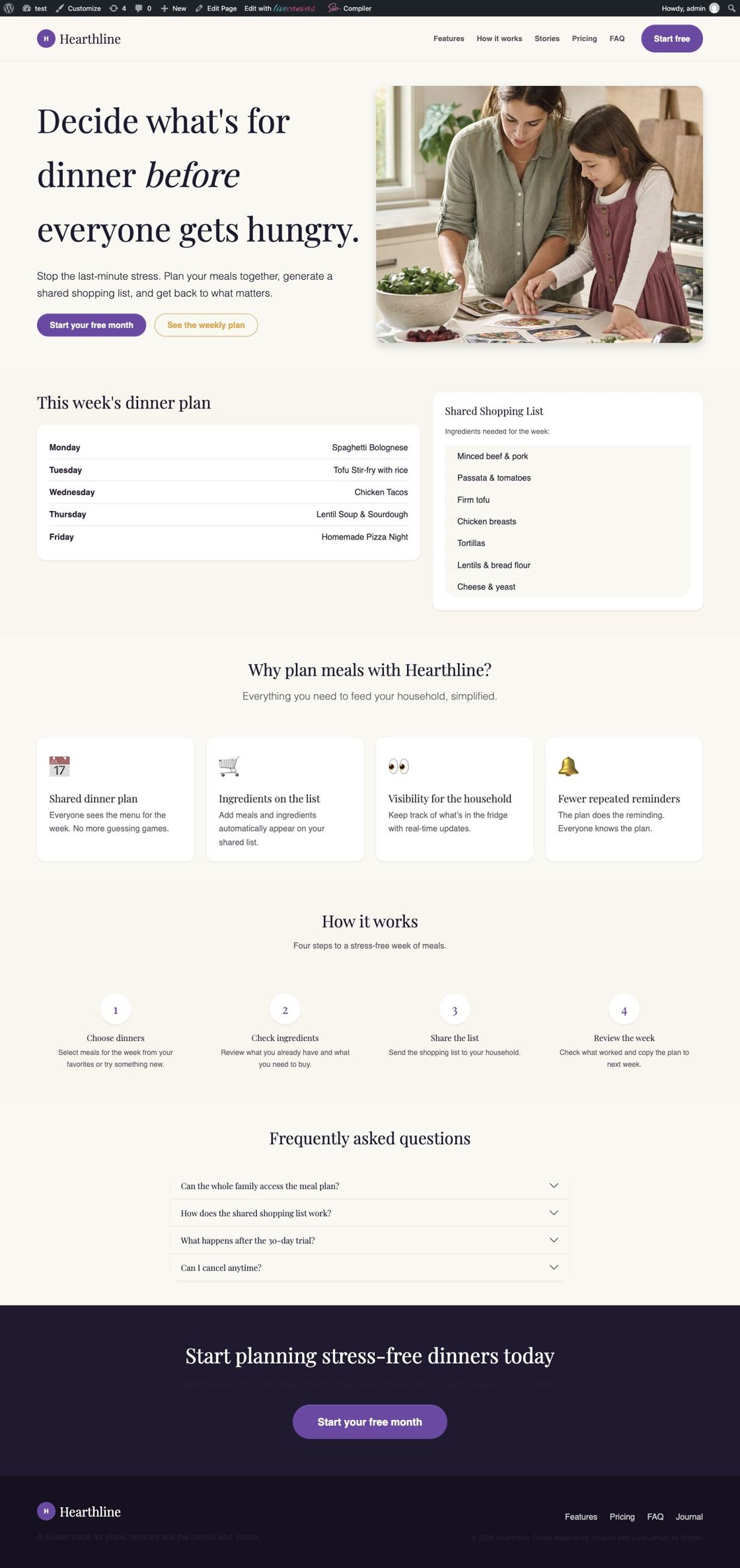

GLM 5.3 Flash
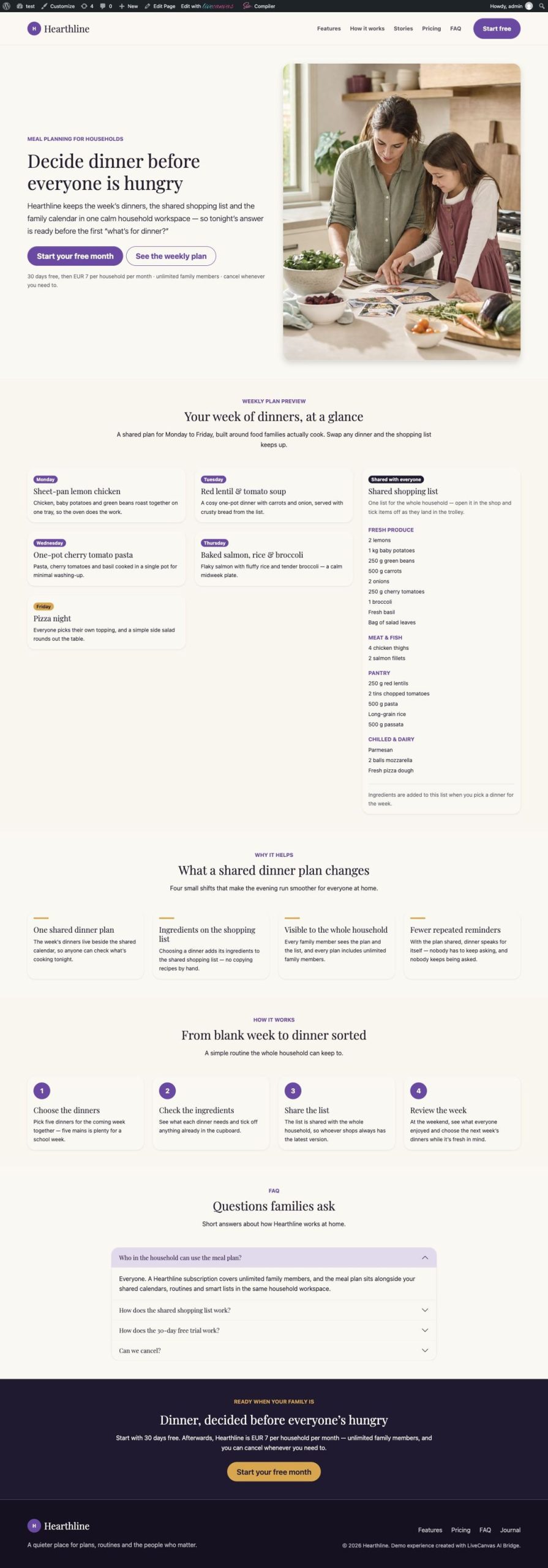

GPT-6 Luna
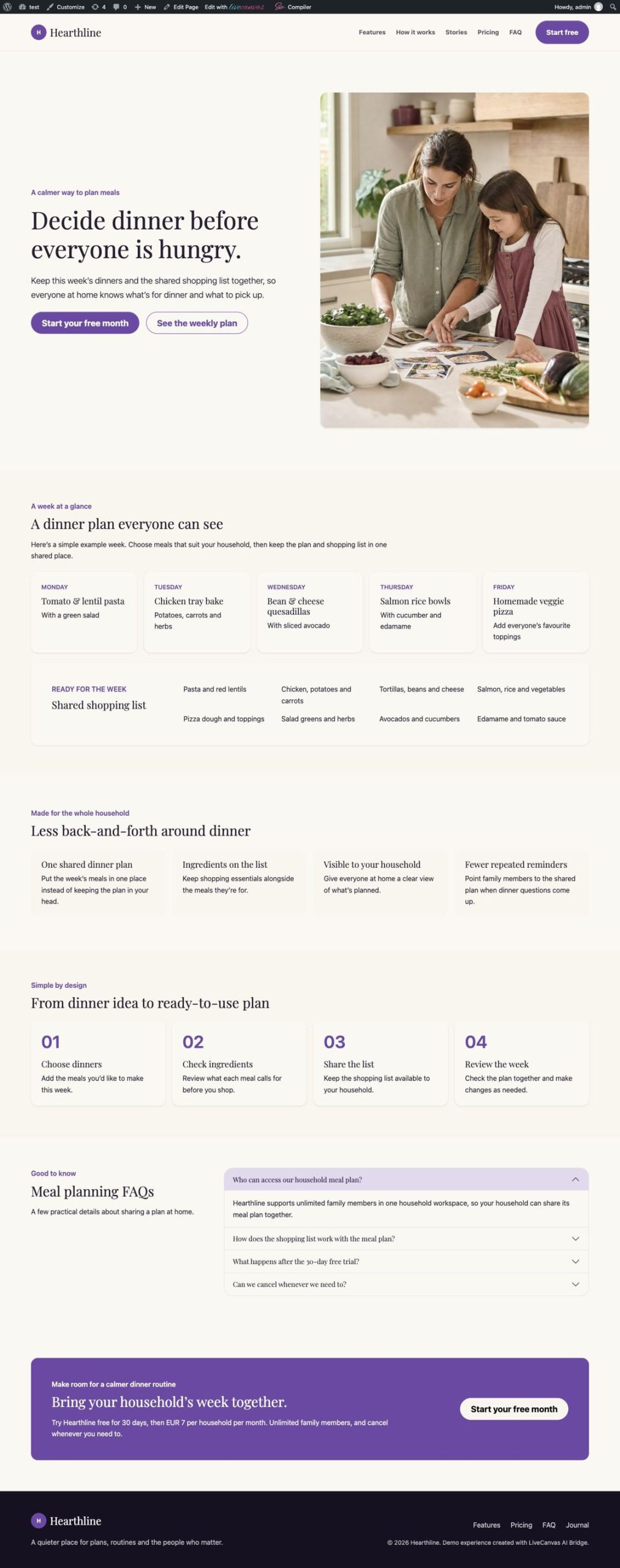

Gemini 3.8 Flash
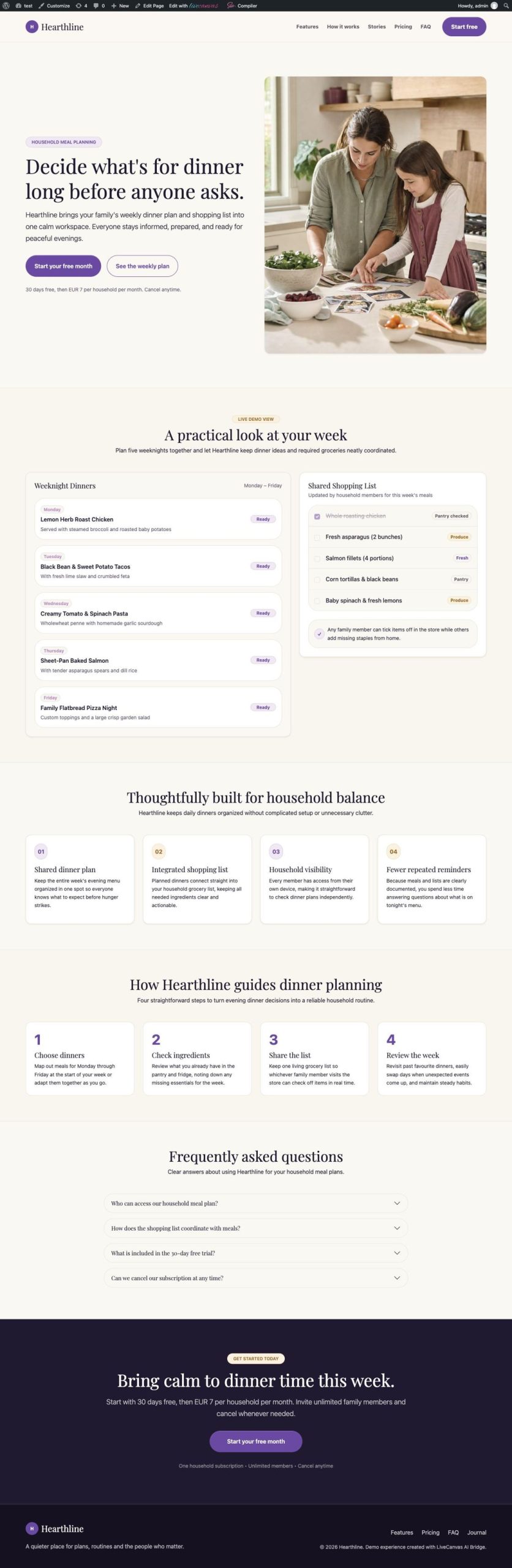

Qwen3.8 Omni Flash
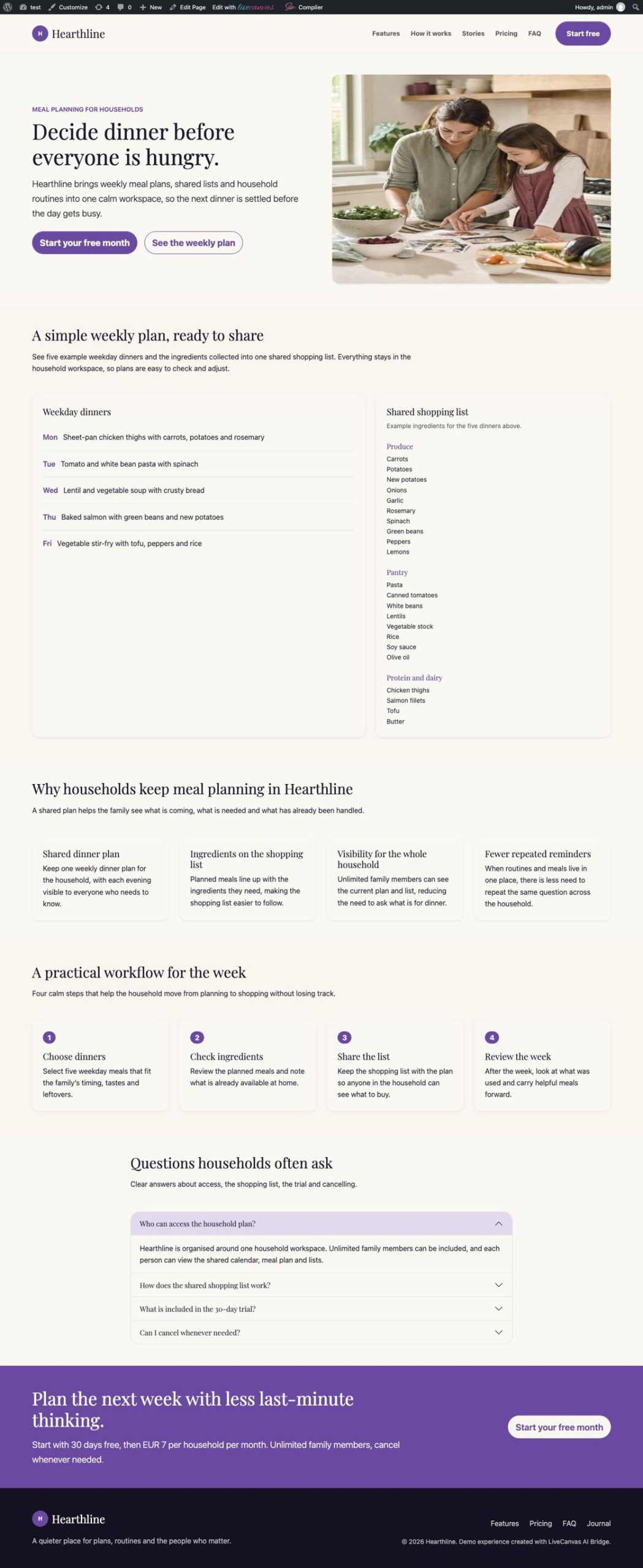

Nemotron 3 Ultra (free)
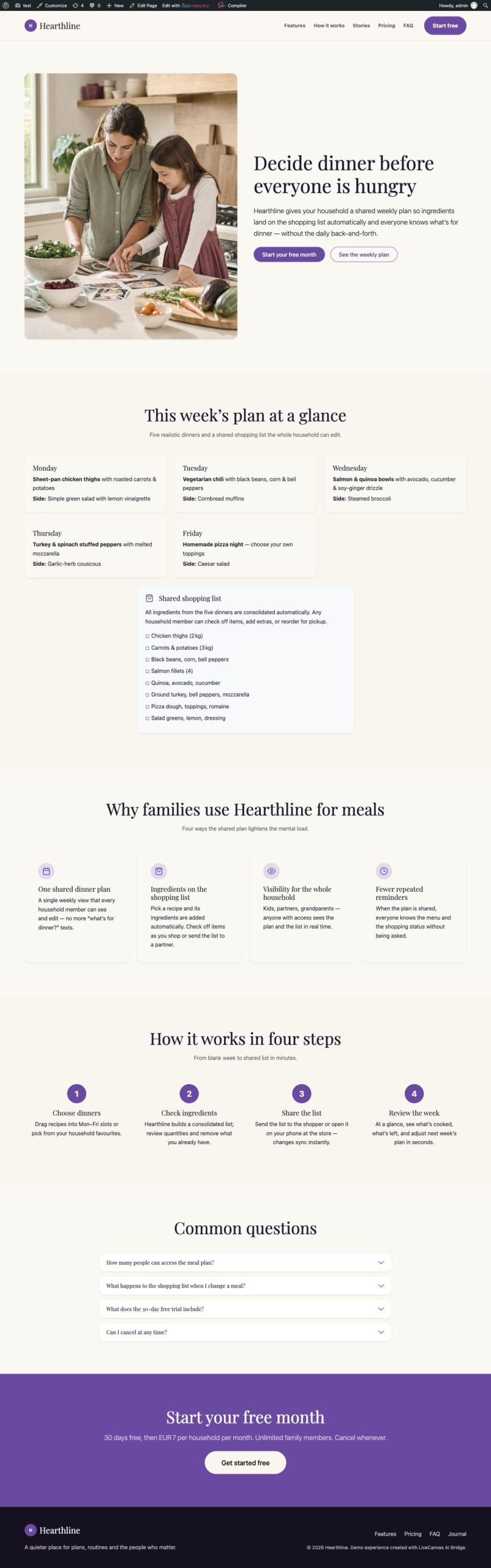

North Mini Code (free)
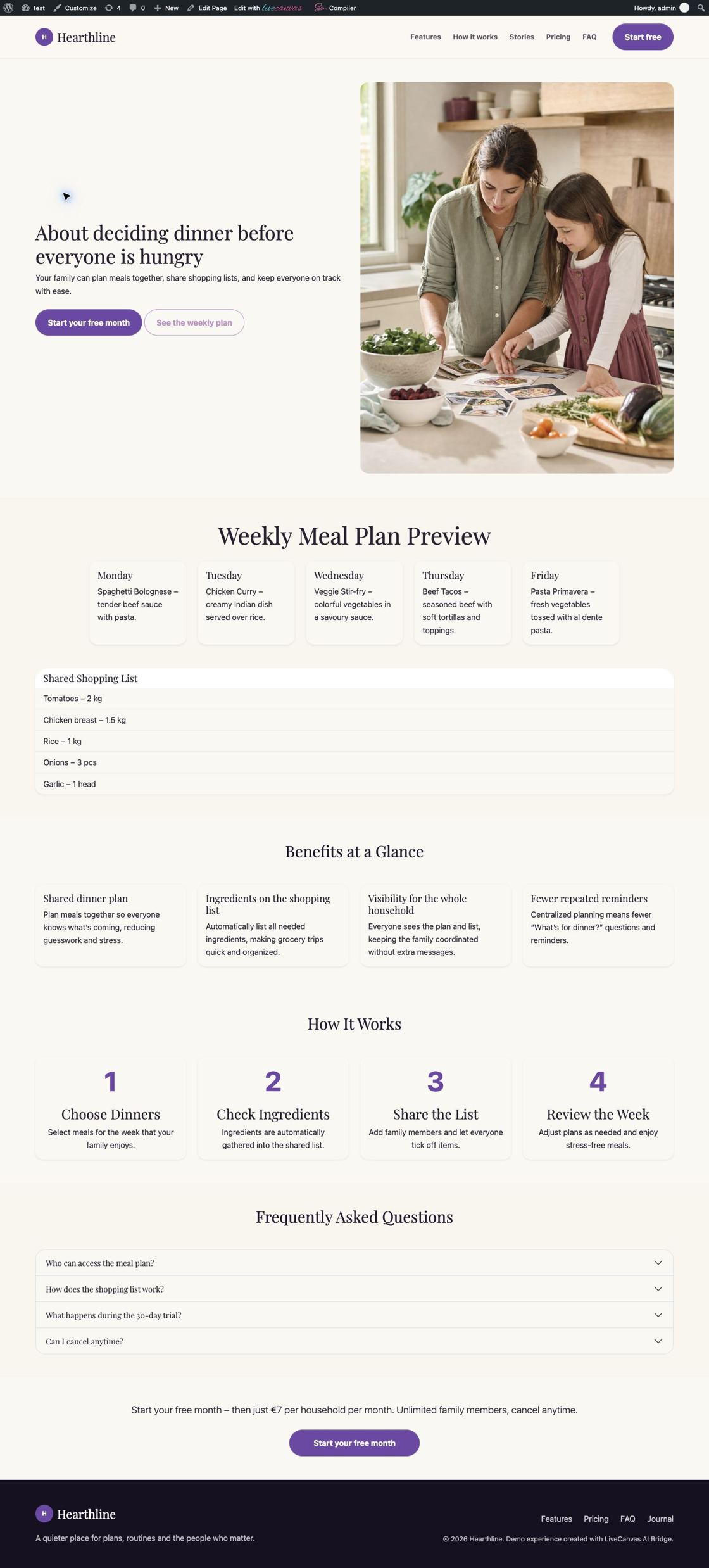

Ling 3.0 Flash VL (free)
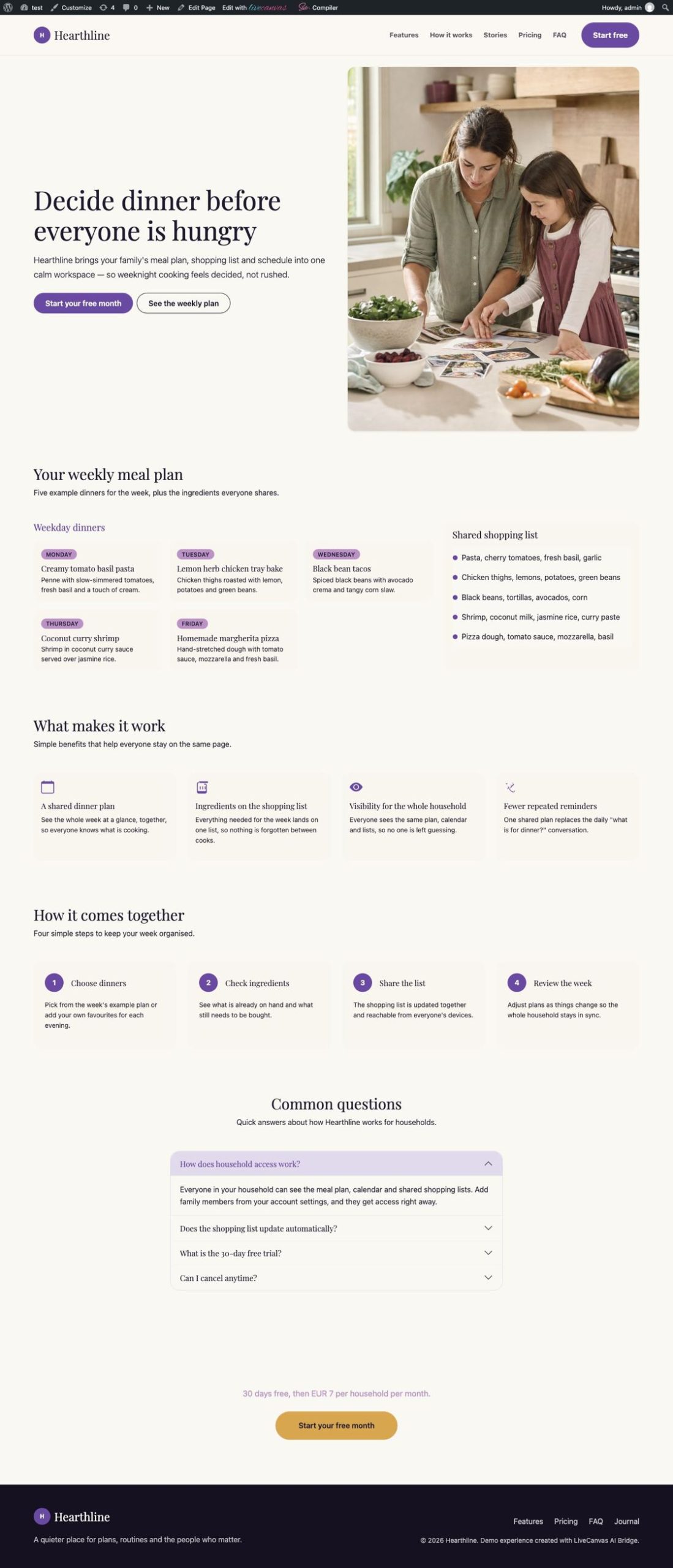

Gemma 4 31B (free)
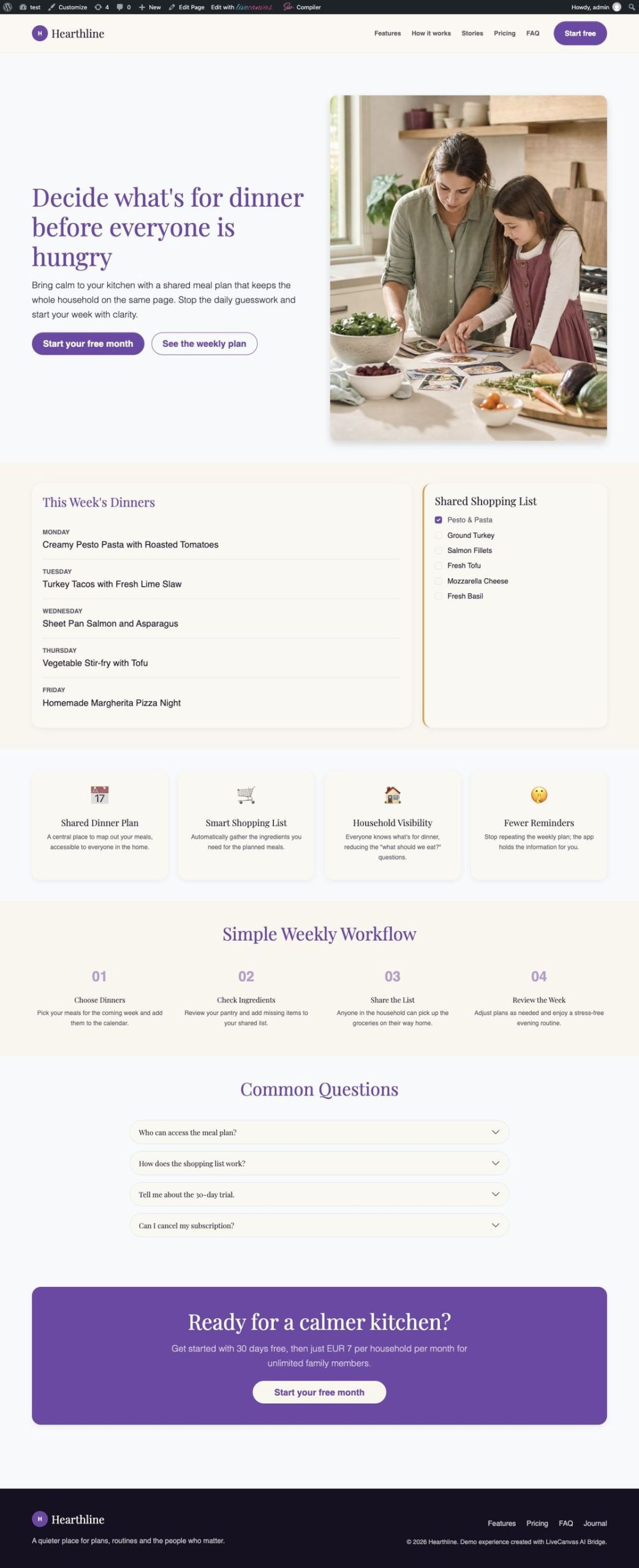

Dots3 Note Preview (free)
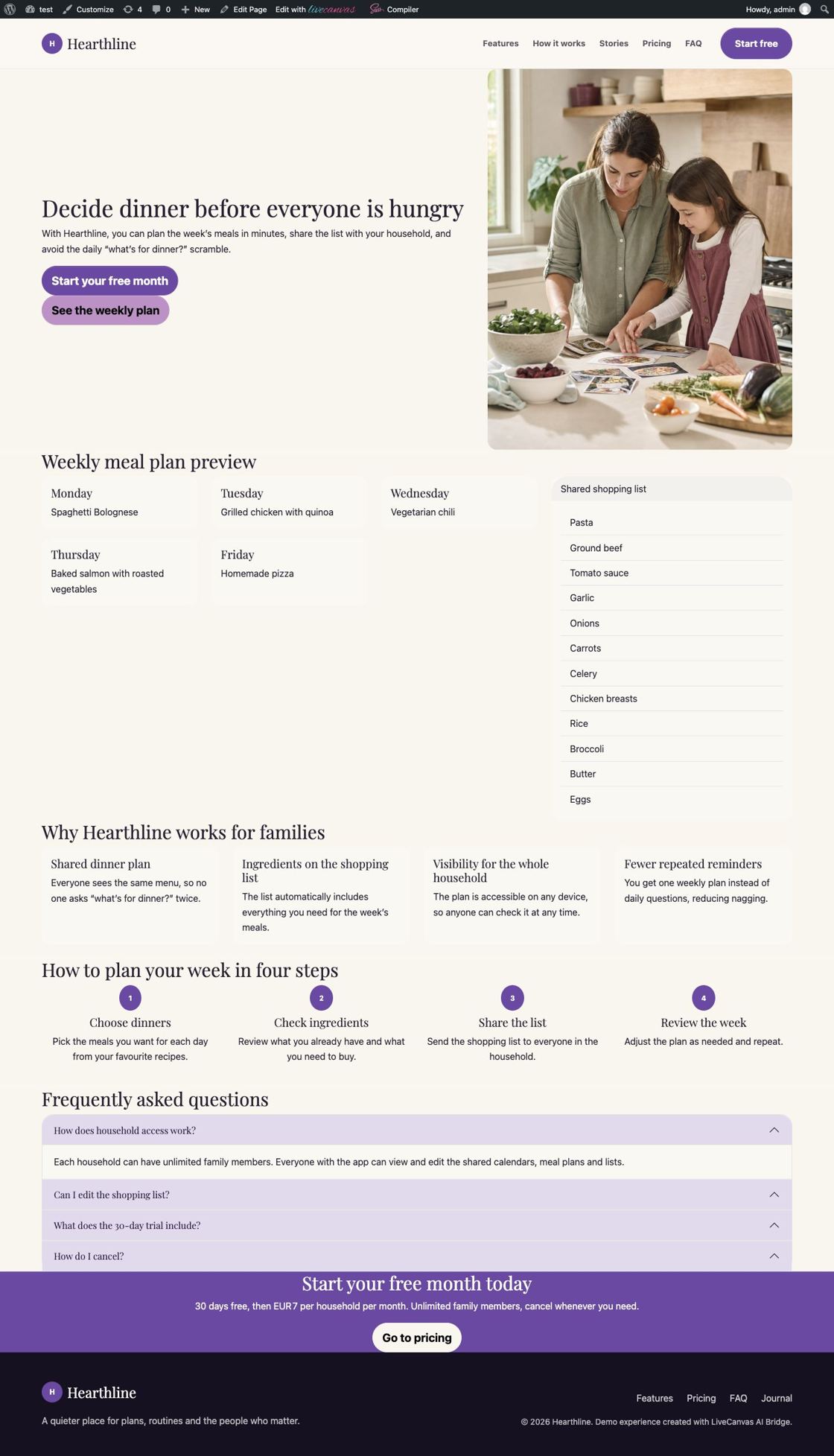

OpenRouter Free router

The brief behind the comparison
A clear brief gives the model something specific to build. Ours combines the site's offer with the theme colours, the required sections and the rules for editable HTML. We used it unchanged for every call, including the instruction to avoid invented product claims. The few claims that still appeared are a useful reason to review the output.
The complete prompt is included below so you can inspect the experiment or adapt the brief to your own site. Replace the Hearthline details and image path with your own content, keeping the layout requirements that suit your page.

AI Assistant
- Model
- Choose your model
in LiveCanvas - Contexts in this test
- Website InformationOffPage TextOff
Paste this into AI Prompts for an empty section in LiveCanvas.
The prompt is unchanged from the benchmark. Before generating on your site, replace the demo image path with a Media Library image of your own. Adapt the Hearthline facts and theme settings for your site.
Rates, capabilities and measurement notes
We checked the OpenRouter catalogue on 23 September 2026. Its listed input/output rates are reference prices; provider routing and caching can change the actual bill. Qwen3 Coder's catalogue entry listed $0.30/$1.00 per million tokens, for example, while the recorded routed call cost $0.00821772. The actual usage charge is the source for the benchmark tables.
The catalogue identified MiniMax M2.5 and Qwen3 Coder as text-input models. The other paid entries listed image input, with additional input types on some models. That is catalogue metadata, not a vision test. We used text prompts throughout.
Catalogue rates and input types for the paid shortlist
| Model | Input / 1M tokens | Output / 1M tokens | Listed input types |
|---|---|---|---|
| Claude Opus 5.5 |
$4 | $20 | text, image, file |
| GPT-6 Astra |
$10 | $50 | file, image, text |
| Gemini 3.1 Pro Preview |
$2 | $12 | audio, file, image, text, video |
| Grok 4.7 |
$1.6 | $4.8 | text, image, file |
| Claude Sonnet 4.6 |
$3 | $15 | text, image, file |
| GPT-6 Sol |
$2 | $10 | file, image, text |
| MiMo V2.6 Pro |
$0.435 | $0.87 | text, image, video, audio |
| Kimi K2.5 |
$0.45 | $2.25 | text, image |
| Qwen3 Coder |
$0.3 | $1 | text |
| DeepSeek V4.1 Flash |
$0.15 | $0.6 | text, image |
| MiniMax M2.5 |
$0.27 | $1.08 | text |
| GLM 5.3 Flash |
$0.15 | $0.5 | text, image, video |
| GPT-6 Luna |
$0.1 | $0.5 | file, image, text |
| Gemini 3.8 Flash |
$0.75 | $3.75 | text, image, video, file, audio |
| Qwen3.8 Omni Flash |
$0.15 | $0.47 | text, image, audio, video |
The available free IDs were nvidia/nemotron-3-ultra-550b-a55b:free and dots-studio/dots-3-note-preview:free; we used those exact catalogue IDs. The model links in the tables identify every requested endpoint.
OpenRouter reports generation time, latency and router latency as separate fields. We preserved those fields separately in the dataset and did not add them into an invented total. We also recorded the time from clicking Go ask AI until completion was observed. Some UI checks had gaps, so those observations are upper bounds rather than precise end-to-end measurements. Saving, review and media preparation are outside the generation figures.
Copy the complete benchmark CSV
category,model,status,attempts,page_id,provider_name,actual_model,cost_usd,input_tokens,output_tokens,reasoning_tokens,cached_tokens,generation_s,latency_s,router_latency_s,ui_last_pending_s,ui_completion_observed_s,desktop_scroll_width,mobile_scroll_width,price_input_per_million,price_output_per_million
Frontier,anthropic/claude-opus-5.5,generated,1,79,Claude Platform on AWS,anthropic/claude-opus-5.5-20260921,0.150148,1322,7243,433,0,56.768,6.223,0.467,,64.363,1440,402,4.0,20.0
Frontier,openai/gpt-6-astra,generated,1,81,OpenAI,openai/gpt-6-astra-20260903,0.22352,822,4306,197,0,73.218,9.515,0.383,73.753,73.89,1440,402,10.0,50.0
Frontier,google/gemini-3.1-pro-preview,generated,1,83,Google,google/gemini-3.1-pro-preview-20260219,0.18209,871,15029,10228,0,102.821,2.993,0.254,103.229,103.38,1440,402,2.0,12.0
Frontier,x-ai/grok-4.7,generated,1,85,xAI,x-ai/grok-4.7-20260916,0.0749456,2084,15207,11747,1152,209.388,0.952,0.268,210.019,210.121,1440,390,1.6,4.8
Default candidates,anthropic/claude-sonnet-4.6,generated,1,87,Claude Platform on AWS,anthropic/claude-4.6-sonnet-20260217,0.116214,913,7565,0,0,93.129,0.941,0.254,93.563,93.689,1440,390,3.0,15.0
Default candidates,openai/gpt-6-sol,generated,1,89,OpenAI,openai/gpt-6-sol-20260922,0.038534,822,3689,825,0,38.428,4.721,0.18,41.239,41.813,1440,402,2.0,10.0
Open weight,xiaomi/mimo-v2.6-pro,generated,1,91,Xiaomi,xiaomi/mimo-v2.6-pro-20260921,0.00459012,844,4854,546,0,91.861,5.911,1.068,93.967,94.093,1440,402,0.435,0.87
Open weight,moonshotai/kimi-k2.5,generated,1,93,SiliconFlow,moonshotai/kimi-k2.5-0127,0.0135846,828,5872,1003,0,195.962,1.264,0.166,196.107,220.794,1440,402,0.45,2.25
Open weight,qwen/qwen3-coder,generated,1,95,Google,qwen/qwen3-coder-480b-a35b-07-25,0.00821772,846,4462,0,5,22.334,1.327,0.178,23.552,23.649,1440,390,0.3,1.0
Open weight,deepseek/deepseek-v4.1-flash,generated,1,97,DeepInfra,deepseek/deepseek-v4.1-flash-20260910,0.0041923,860,9695,4660,0,180.958,0.684,0.164,181.986,182.107,1440,402,0.15,0.6
Open weight,minimax/minimax-m2.5,generated,1,99,AtlasCloud,minimax/minimax-m2.5-20260211,0.021603925,835,17798,13970,0,363.144,0.889,0.154,318.836,390.688,1440,390,0.27,1.08
Open weight,z-ai/glm-5.3-flash,generated,1,101,Together,z-ai/glm-5.3-flash-20260826,0.01026135,829,20274,15759,0,240.867,0.384,0.172,241.832,241.938,1440,390,0.15,0.5
Maximum savings,openai/gpt-6-luna,generated,1,103,OpenAI,openai/gpt-6-luna-20260922,0.0022517,822,4339,873,0,47.557,17.031,0.177,45.659,66.324,1440,402,0.1,0.5
Maximum savings,google/gemini-3.8-flash,generated,1,105,Google,google/gemini-3.8-flash-20260902,0.032172,871,8405,2362,0,82.938,1.923,0.279,84.075,84.172,1440,402,0.75,3.75
Budget multimodal,qwen/qwen3.8-omni-flash,generated,1,107,Alibaba,qwen/qwen3.8-omni-flash-20260918,0.00608499,908,12657,8743,0,192.84,0.643,0.171,194.252,194.348,1440,402,0.15,0.47
Free,nvidia/nemotron-3-ultra-550b-a55b:free,generated,1,109,Nvidia,nvidia/nemotron-3-ultra-550b-a55b-20260604:free,0,877,7108,1405,0,298.243,5.33,0.172,295.703,319.874,1440,402,0.0,0.0
Free,poolside/laguna-s-2.1:free,error_429,2,111,,,,,,,,,,,0.0,8.468,,,0.0,0.0
Free,cohere/north-mini-code:free,generated,1,113,Cohere,cohere/north-mini-code-20260617:free,0,807,8335,5533,0,120.962,0.333,0.179,122.761,123.427,1440,390,0.0,0.0
Free,inclusionai/ling-3.0-flash-vl:free,generated,1,115,Novita,inclusionai/ling-3.0-flash-vl-20260910:free,0,899,15785,7509,3,210.597,1.072,0.172,208.368,229.717,1440,390,0.0,0.0
Free,google/gemma-4-31b-it:free,generated,1,117,Google AI Studio,google/gemma-4-31b-it-20260402:free,0,873,3472,0,0,97.723,1.813,0.398,96.015,118.949,1440,402,0.0,0.0
Free,dots-studio/dots-3-note-preview:free,generated,1,119,AtlasCloud,dots-studio/dots-3-note-preview-20260813:free,0,840,15545,13908,0,166.214,1.484,0.16,48.775,219.476,1440,390,0.0,0.0
Free,openrouter/free,generated,1,121,Nvidia,nvidia/nemotron-3-ultra-550b-a55b-20260604:free,0,877,5094,886,0,219.967,0.725,0.181,205.174,231.009,1440,402,0.0,0.0
The results are first attempts from one staging site, on one date, with one additional attempt for the failed Laguna endpoint. The saved dataset includes the actual provider and canonical model name for each successful call.
Provider and model-family logos: Lobe Icons. Brand names identify the models tested.